Monday, February 23, 2026

Replication versus Storytelling

I suppose with science fiction, I am far more interested in storytelling than replication. I could go all-out with a Starfinder conversion, but what am I doing? My Star Frontiers conversion is closer to my heart, and Starfinder just feels like too huge an undertaking; it would be "just to have" rather than something I really want and need.

I would love to have a great Starfinder conversion, don't get me wrong.

Still, even Star Frontiers feels limiting to the stories I like to tell using science fiction. It is a great classic universe and sandbox, and simulating the universe would be a nostalgic throwback, but I have to ask myself, "Why am I playing science fiction?"

Many science fiction games can't even answer this question.

You will get this huge game, full of space monsters, starships, classes, gear, and starmaps, yet it will strangely feel empty, like there is nothing to do. The hook isn't strong, the obvious isn't as obvious, and there is no "why" answering the question of why you should live and adventure in this universe.

With some science fiction games, it is all about money, and that is a motivation, but not one that really drives me. Original Traveller and Space Opera fell into that category for us. Other games, especially Starfinder, are about levelling and "powering up" with better gear. Star Frontiers falls into the "pulp adventure" category, like Savage Worlds or Amazing Adventures, and those are the sort of self-driven motivations I like.

A great simulation can be a motivation for adventuring, too, especially a very well-done conversion with highly compelling GURPS templates. There is nothing like getting a great, blue-collar, GURPS template, like an astronaut, and taking that character through a crisis and a small adventure, especially in a universe where that sort of adventure would not normally "be a thing" like in Starfinder, where the game is mostly mixed combat and exploration, with light roleplay, and very sparse skill use (typically meant to overcome obstacles).

This is that "immersion factor" that GURPS can create.

Can you do a "chef adventure" in Starfinder? Sure, but I would bet 100cr that another group of space goblins is in there somewhere as a toss-in combat encounter, there is a map, and it breaks down into pawns moving around and trying to get to an end boss. In GURPS, you have the skills to do a really great chef adventure, with history, ingredient knowledge, cooking, and even social skills coming into play, along with various advantages and disadvantages.

GURPS throws the brakes on a typical "d20 experience" and forces you to slow down and enjoy the journey, and all the skill rolls, failed self-control rolls, and encounters along the way. With d20, it feels so streamlined and abstracted that I lose the smaller details, and I just want to clear the next room, search for treasure, and move on.

In GURPS, the small things matter more. Even my character, the advantages and disadvantages, my skills, and who I am with my history. My gear is part of my character build, and my loadout matters. Where gear is stored, and weight matters a great deal. A lot of games hand-wave off gear and encumbrance, and in GURPS, you aren't wearing armor you can't carry.

Plate mail isn't an AC entitlement; it is heavy! Some of these games ignore how heavy a suit of plate mail is, and you can walk around fully decked out in plate armor at a D&D STR of 10 and never suffer a movement or encumbrance penalty. The rules supersede reality and even common sense, and "because the numbers," we end up with a situation where character armor is maxed out because the rules would break if plate mail were casual clothing. Even a full suit of chain mail is heavy. I rarely have a GURPS fantasy character who can wear plate armor because the STR requirement to move is so high.

A lot of fantasy games "go silly" due to the math, and they drift off into unreality-land. Sure, a plate pauldron and chestplate count as "plate mail," and the rest of your fantasy outfit can be Hot Topic. "It's fantasy," they say, and there is a point where it is "too much fantasy," like how an abstract rules light game is "too simplistic" to the point where nothing means anything anymore. If everyone can wear suits of plate mail weighing 75 pounds and move around like they are in jogging shorts and a tank top, I check out.

Seeing a 5E player's face when I tell them their character in a suit of heavy plate has a move of 2 because they are heavily encumbered is priceless. Yeah, that armor you are wearing is as heavy as two of the boxes of Pathfinder books that I own. "But it's fantasy!" does not cut it anymore. Fantasy needs to be based in reality to even qualify as fantasy, or we fall into a kid's game of "nuh-uh" and "I am Godzilla, so it doesn't affect me."

I am honestly tired of the "it is fantasy" argument being used to ignore reality. Yes, fantasy is why we are here, even in science fiction, but fantasy is at its best when we have that contrast between the "grounded world" of reality, and then the fantasy of fantasy that makes everything seem so special and amazing. Using fantasy to say "reality does not exist here" makes everything meaningless and unrelatable. It devolves into "nuh-uh" -isms, and the argument comes up again and again, the next time to justify something more outrageous and often, game-breaking.

"I can wear plate mail with an average strength and move around normally!" No, sorry, you can't. Spend the points on a decent STR and give something else up, and you have "earned" that "fantasy." For many GURPS fantasy characters, just managing to wear DR 2 heavy leather is a major victory, and plate mail is an endgame goal.

I can carry around a heavy machine gun all the time!

Of course, they would let me into the bar with it!

This is a fantasy!

Again, our Car Wars experience was our wake-up call decades ago. No, they won't let you into the bar carrying heavy weapons or explosives, and if you think you can try because "this is fantasy," those running the place will likely unload on you. This is Car Wars. Life is cheap. Few care about your feelings. Please roll up a new character, and try to make them less stupid this time. Or they may have been smart, who knows? The world doesn't care, and I am not pulling punches.

In GURPS, your gear and loadout are half of your character build. Character power is not all contained in the rules and "oh my gosh" powers the book throws at you. Games that ignore the encumbrance rules are an instant red flag, and you will likely see the game bestow all sorts of kewl powerz on you to distract you.

This is also why some of these kewl powerz games are difficult to translate into GURPS, since they rely on a baseline of divorced reality that wildly differs from GURPS'.

The same applies in science fiction. A lot of games feel like they can treat armored battlesuits like casual jumpsuits, and I get it. Mass Effect does that (due to limitations in the character model and its simplification). Still, it breaks my immersion to have armored battlesuits as everyday clothing. I like those armored suits to feel special, to have to store them on a rack and put them on before a fight, and to be forced to fight without them when on shore leave or in social situations that go wrong. I feel the same way about heavy weapons, being forced to wear casual armor, and carrying screens in lower-threat situations.

Yes, you can ignore it all in GURPS and play "rules light," but I love the game's simulation aspects. They create new build options, gear loadouts, and being a character is more than a progression chart and powers. Part of my storytelling is gear and the character's equipment.

Many science fiction games get it wrong. Your high-level power armor becomes your everyday outfit. You haul around laser-heavy machine guns to bars, and have enough space explosives strapped to you that you could level a starport hangar. Despite an average STR, you can carry around an armory and a heavy weapon that weighs 50 pounds.

We had the same problem with Car Wars roleplay 40 years ago. The character is not the car, and the 3 DP "body armor" can't be worn everywhere. Pretty soon, you need to get out of the car, visit a bar in everyday clothing, and live your life without four wheels under you at all times.

Once we realized that, the world of Car Wars came alive. The world was a real place, and not just a map of quarter-inch squares, with a grid line every inch.

Immersion forces you to think about how your character equips themselves and how that affects their movement through the environment. It affects social reactions and can be forbidden in many places. You are forced to store your good gear, and you have to decide where in the game world to store it. You can't just throw expensive weapons and armor all in a cart and leave it parked on a street corner, and the "high-level game" in science fiction involves having your own ship, base, or secure vehicle to store gear in.

This is why medieval knights had bodyguards, squires, a trunk holding their plate mail, a few warhorses with horse armor, and an entourage. Just to support "full plate," they had a supply chain following them around, and the budget in gold to roll in big.

GURPS science fiction is really good and thinks about all this stuff, and it forces me to slow down and think about it, too. Other games? They fall into the rules-light trap and hand-wave away the complexity.

I don't want to simulate that.

Monday, February 16, 2026

Star-GURPS-Finder, Part II

There are a few stumbling blocks with the GURPS conversion for Starfinder, one being that the original classes have no starship skills. Well, very little in terms of "defined skills" for a starship outside of piloting and engineering; otherwise, anyone could conceivably hop into a starship station and help. I get it, we don't want players "feeling helpless" during a starship battle, and "everyone should have fun."

So this is a universe where everyone is assumed to have some familiarity with starship functions, and there is no dedicated skill set for starship operation. GURPS has a complete set of skills dedicated to starship operations, and it goes into extreme depth here. So, if you are not skilled, you are pretty much helpless and more of a hindrance than a help.

So, there is a clear difference between how GURPS sees starships and how they are handled in Starfinder "to enhance fun." You could always require every player to pick a windcard bang-skill for some sort of starship operation function (piloting, gunnery, sensors, engineering, etc.) and leave it at that, just so the characters mesh better with the universe and have things to do when the laser cannons fly through the vacuum of space.

Frankly, bang/wildcard skills are a great way to do a simplified GURPS Star Frontiers conversion, and that is a tool in my toolbox. Just use the existing 13 Star Frontiers skills (plus five Knight Hawks starship skills) and make them all wildcards, and forget the GURPS skill list entirely. It is quick and dirty, works well, and is simple; GURPS gives us the option to do it this way. Just get playing!

For Starfinder, wildcard skills may be the way to go. There is always this question when doing a conversion: "How deep do you want to go into the skills?" For a full-phat conversion, move every character class and subclass choice into 100% GURPS-compliant templates, only use GURPS skills, and let the system sing. Starfinder has 20 skills, plus you could crib in a sensors and gunnery skill, and completely replace the GURPS list with a stripped-down core of these wildcard-like skills, plus a few others the system needs.

Starting with the classes and builds (like a subclass) as templates would make the most sense. Many of them are sort of generic in scope, like Mystic/Shaman, or Operative/Outlaw. These are easy enough builds in GURPS, and I bet you could find comparable examples of them quick enough. Still, in 3.5E fashion, the classes themselves are huge scaffolds of powers, spells, and other abilities given over levels.

General roles and occupations feel like the better way to go, not specific class rebuilds.

3.5E has a strange tendency to make all "outlaws" the same (defined down), whereas in GURPS, outlaws come in many styles and varieties (defined out). Beware of over-converting, which can tighten the screws too much and make the templates too restrictive and all-encompassing.

Level-based systems are inwardly focused to a fault, where you start with nothing and then try to narrowly define a character through a framework of rules, math, and capabilities. Point-buy systems are outwardly-focused, where you start with nothing, and leave it up to the player to form the character with their choices. Starfinder tried to take a universe of characters and define them all with levels, and the result is book-after-book of rules.

Still, Starfinder was ambitious, and they deserve props for taking 3.5E and turning it into a science fiction game. It reminds me of Spycraft in a way, and anytime 3.5E tries to do a modern setting, the bloat and rules needed to cover everything expand to an insane degree. 3.5E is the antithesis of rulings over rules, since 3.5E requires a rule for absolutely everything.

Even GURPS is easier than 3.5E, given the volume of rules the game eventually needs for everything. GURPS uses general rules that handle every situation, whereas in 3.5E, a specific rule needs to be written to cover everything in the game. This adds up quickly to hundreds of pages of rules for every specific subsystem, class, power, and build.

One of the areas that has always puzzled me about Starfinder is the lack of mystery in the universe. The rules keep saying "discover the mysteries of the universe," but with every power laid out, every magic source known, every god cataloged, and every class built fully vetted out - where is the mystery? This has always been a problem of 3.5E and on, and it is even present in D&D 5E. With every "mystery of magic and the forces of the universe laid out," where is what we don't know?

Mysteries, in the most part, are "story mysteries" and not "leaving the nature of power open to interpretation." Power in any D&D-style game needs to be laid out without any room for interpretation, or else there will be arguments at the table. This is still the legacy of the Magic: The Gathering design style that endures in fantasy today.

At least in GURPS, I can "wall off" power systems and sources, and leave them as the mysterious forces behind the powers of magic. Of all my games, GURPS, Call of Cthluhu, Palladium Fantasy, and Dungeon Crawl Classics let magic "feel like magic" whether through game systems, design, mechanics, or the power given to the referee to shape the universe. How a game handles magic and the unknown is one of the criteria I use to decide whether to keep a game out or put it in storage. Castles & Crusades is the only exception to this rule, since everything else about that game is S-Tier.

In GURPS, I can rule that "all magic causes corruption," and then rule that the corruption-caused disadvantages are "divine influence and obligation," "demonic taint," "arcane mutation," "alien intelligence influence," or even "Elder One de-evolution." This gets me closer to DCC's rules, and that puts the fear of using magic back on the table.

Do you really want to fling that spell so casually? Your star mage could end up with strangely glowing eyes that cause others to be wary of them, and make hiding in the dark difficult. Flavor the disadvantages however you wish, just make sure they fit the theme.

Still, I like there to be some mystery to the universe, the gods to be alien and far from understood, and the nature of magic and "strange happenings" not to be laid out on page after page of exacting rules. The original Coriolis game had an amazing amount of depth and mystery to the setting, along with the nature and role of powers. Things were never fully understood, and there was room there to make magic and powers your own.

Magic and technology should oppose each other: humankind's need to conquer the universe and harness its knowledge and effort opposes the unexplained phenomena of life and the universe's energy. The minute "magic becomes a battery technology," you have lost me. Magic should never be understood, nor should it reflect the mastery we have over math and machines. It is not a power for "glowing fist energy" in artwork or media. There is a price, a cost, and an unexplained nature to magic, the same as the mystery of life and death.

Granted, once you define or figure out the big mystery, the entire universe is over.

Starfinder game revels in book after book of rules. A full conversion is unlikely, so the best I can do is be inspired by the "science fiction plus fantasy" setting and do my own thing.

With GURPS.

There is something here I like, the contrast between magic and technology, the wizardry of machines versus the faith in the power behind the universe and life. This is the classic Star Wars conflict between the original never-defined or understood Force and the machine-god power of the Death Star. Starfinder tends to mix it all up in a pop-culture pastiche Guardians of the Galaxy veneer of space adventure.

We have lost the ability to create wonder and mystery, at least in films and TV. No one will pay attention. They are all on their phones. The second screen has taken over our frontal lobes.

While enjoyable, Starfinder is not what I am looking for in space fantasy.

But it is a start.

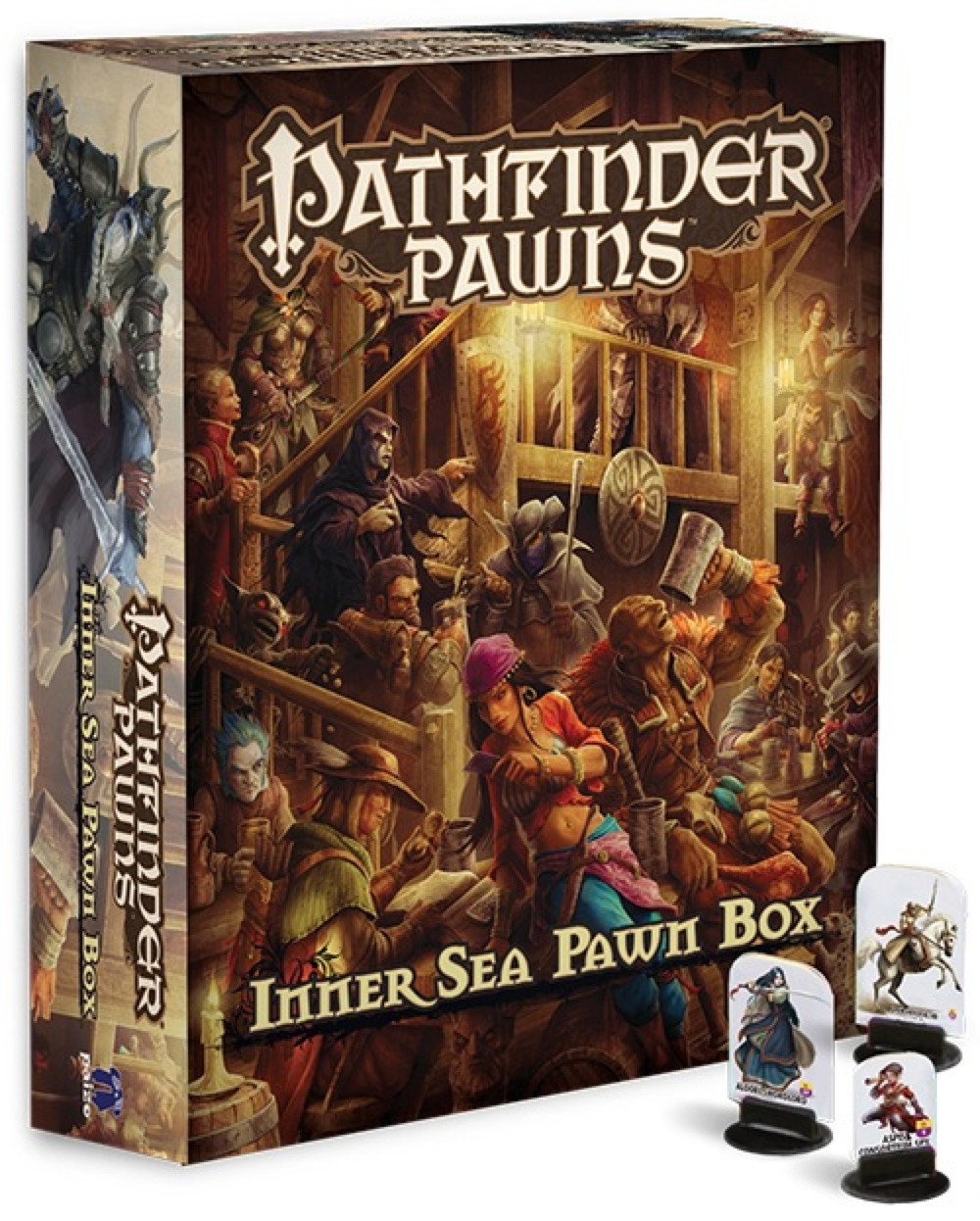
I like the pawns I have, and they are beautifully done.

Now, to just figure out a way to use them with GURPS.

Monday, February 9, 2026

Star-GURPS-Finder

I have a good collection of Star Finder pawns, too; about a box and a half are for that game. I played the 3.5E version of the game and enjoyed it until it fell apart. The adventures held back money to the point that my characters were constantly broke, starship-owning space travelers. Since money is only used to upgrade armor and weapons, and all of those are leveled items, the game sort of makes no sense.

And I sit there with a perfectly good starship and wonder why I can't just run cargo for extra cash, like in any 2d6 space game like Cepheus or Traveller. But the next adventure awaits, and I found myself working for "space undead." I had no interest in helping them, and the adventure path fell to pieces.

I tried a second time with the sandbox setting, and that was fun, but the leveled gear and that "arms race" started to take over the game when good stories were getting started, and I lost interest again.

I also found myself abusing my knowledge of D&D 3.5E to my advantage, and melee combat with a strong character outshone anything else, to the point where my 1d4 damage laser pistol pilot felt useless. We would just lure monsters into opportunity attacks and whallop them. While D&D 3.5E is the best D&D we got from Wizards, the combat in any version is severely lacking and exploitable.

I would prefer a normal science-fiction system to a level system in space. The only exception would be the Amazing Adventures game, but that is more of a pulp-action game, and those can do most any genre well.

The "what if" is converting the game into GURPS, which would mean all that would be the races, and then using GURPS' great selection of science fiction gear to fill in the rest. There is "magic" present in the setting, and GURPS does that too; it is just a question of "what flavor do you want?" There are psionics, too, and there are already far too many power systems in this universe, which gets a bit confusing. "Too much mojo" is the name of the game here, and it almost feels like too many magic and psionic power systems are in the game.

GURPS would do a good job, but in all honesty, it probably would not really feel like Starfinder. It would be a GURPS Space with magic and psionics, and Starfinder races, with a lot of strange pawns that I would need to create game stats for. I wonder if Amazing Adventures would do this easier, since I could crib monster stats from the fantasy game, mix in spells and spionics from these rules, and just have an easier time converting and playing with the pawns.

Still, GURPS would give me a "throttled own" Starfinder experience, far more concerned with the lower-level skill and gritty combat game than the 3.5E system ever was. Starfinder was always a game that felt like it "skipped over the surface" far too much, ignoring skill rolls in lieu of easy combats with another group of space goblins. In the adventures I played, even social interactions felt played down, and another set of combat stats was given, should "3.5 players were gonna 3.5 their way through this again." D&D never did social and skill-based play all that well, and Starfinder 1e inherited that legacy, becoming a combat game with a science-fiction veneer.

Those weak 1d4 ranged weapons were a pain, though, and the higher-level ones made you roll multiple d4 dice, like 12d4, and I am sitting here wondering why anyone would want to physically roll 12d4 for any weapon. For the love of my fingers, make this 6d8.

It would probably help Starfinder and make it seem like a more grounded universe to slow things down and celebrate the characters, rather than rushing through the next space dungeon and rolling initiative. GURPS science fiction does that; it can put the brakes on a "rush through it" sort of adventure and force you to think about your character and what they bring to the table. And GURPS makes characters versatile in many more ways than a list of special attacks, spells, and a to-hit bonus and number of attacks.

Another part of me wants to dig deeper into the magic systems of this world and define them more clearly in GURPS than in Starfinder. There are a number of tightly-defined and thematic subclasses that make the castes special here, and doing a conversion without them would feel incomplete. When you look at Starfinder, it is the precursor of Pathfinder 2, and the stronger and more thematic subclasses make the character here.

There is a difference between a "dress up" style of GURPS conversion, where you are just playing GURPS Space with a few of the races along the veneer of the universe. There is a deeper level of "total conversion" where you put in the work, build the subclasses as true templates, and rebuild the Starfinder power lists in GURPS from scratch. I get the feeling Starfinder would benefit more from the latter, where in fantasy, GURPS has 90% of what you need for simulating fantasy tropes without too much rebuilding, though Dungeon Fantasy is a good example of putting in that work.

I would probably template the base classes and then offer subclass choice templates under them. Spells would need to be converted. If a conversion needs this much work to make it feel right, you start to wonder if the project isn't too big to take on. It would be cool and be a fresh take on the classes and subclass abilities, but it would be a lot of work.

You begin to wonder if a "Starfinder lite" experience with tech-plus-space-magic is the way to go. This is how Stars Without Number does it, where you can play the base space game, and then port in "space magic" through BX additions. Is the "Starfinder vibe" that important? If so, put in the work and make the conversions. If it isn't, do a generic "space magic" setting.

By playing Starfinder with GURPS, the same thing I have seen reported with Traveller may happen: it feels like putting on a "VR headset" and becoming immersed in the world in a way the original game could not provide. GURPS can help give games an "identity" that otherwise feels lacking, and show people what it is like to live in the universe and experience it at a lower level than a more rules-light system can offer.

It is an interesting project, but a huge one if you want the Starfinder flavor. If you are a super-fan, probably play Starfinder with either the 1e or 2E rules. If I want to use the pawns, maybe a generic "space fantasy" GURPS setting will be enough, flavored but not a faithful conversion.

Tuesday, February 3, 2026

GURPS-Finder

I have about eight boxes of Pathfinder pawns, mostly for Pathfinder 1e, the D&D 3.5E version of the game that I loved (you can tell by the stylized cross on the "P"). This was the original world, Golarion, still raw, where demons roamed, slavers preyed on the weak, kingdoms made pacts with devils for power, flesh weavers butchered the innocent in magical experimentation, forgotten empires scattered the world with fallen ruins, and savage monsters terrorized the land.

The new Golarion and Pathfinder 2E, I am not as much of a fan of, since a lot was retconned and removed from the world. The new world is more fantasy-modern cosplay pastiche and less Conan fighting dragons and freeing the world from demonic slavers. They went their own way for a more family-friendly setting, filled with steampunk, cute races, and faux-modern anarchisms, and good for them. They do what they feel they need to do to compete with the D&D audience, and the market has changed.

But this is not the world of stark contrasts and good-versus-evil I fell in love with.

I am still a fan of the original Golarion world. The art, vibe, feeling, and "this is not D&D" mantra of the world, aimed at "the cool gamers," were awesome in the late 2000s and still hold up today. This is where the cool gamers played. D&D lost its savage swords & sorcery mojo with D&D 4E, and it never came back. Pathfinder 1e and its original Golarion setting are one of the last times that a major Conan-style setting in a D&D-like game was published.

So, what do I do with eight boxes of Pathfinder pawns?

Well, I do have a lot of mega-hex tiles from The Fantasy Trip, and these go wonderfully with my pawns. The Fantasy Trip and its mega-hex tiles are like the peanut butter to the chocolate of GURPS, and being able to put together twisting hex-labyrinths is an amazing thing to do on my gaming card table. This is really good gaming, and my Pathfinder pawns and these tiles are incredibly good GURPS gaming, almost like a fantasy wargame (like TFT, but GURPS), and they sing so well together.

So I either play a GURPS-Finder game and rebuild the entire world as a GURPS-style savage sorcery world, or I use the pawns for my own world. Even though the Pathfinder world is a strong one and filled with amazing places and adventures, I am not tied to the Golarion world as strongly these days due to the retconning, and the changes GURPS would bring are dramatic enough that they would alter the role of everything in the world.

I would like a lower-fantasy world where magic is rare and special. There is a realism and grittiness that GURPS does extremely well, where the default high-fantasy D&D 3.5E to 5E puts magic in everything, and magic has this "free" feeling that reduces the importance of normal people in the setting. With GURPS, a 22-minus in blacksmithing makes you an extremely valuable and skilled craftsperson, and that one skill means a lot more than untrustworthy and other-worldly magic.

Magic as an other-worldly and alien force is the key here, and it is almost a Lovecraftian view of spells and casting. All magic has a price, in the physical, corruption (out of GURPS Horror), causing strangeness in the local area, alliance with demonic forces, or having other disadvantages that make the average person very distrustful of the practices of the arcane and those who flaunt their magical prowess.

Similarly, the cost of divine magic should weigh heavily on the faithful. A cleric of one god may not be welcome in communities that worship others, and that suspicion and distrust would run deep in a world where faith equals direct power. Imagine if organized religion in this world had access to magic powers and the ability to cure diseases and restore life? They would be the government, or control most of it through their influence. What would the wealthy give to practically live forever? What would the faiths ask of them?

Also, the war between arcane casters and the divine would be one over true and societal power. Some faiths may declare arcane casters heretics just out of "who controls magic" and send out inquisitors and launch crusades on lands where arcane casters are welcome.

Think seriously about consequences, and you will find a lot of cool things to put in your games. The original Golarion conveniently forgets about most of this cause-and-effect due to needing to implement the 3.5E modern fantasy model. Part of the reason I call out the modern fantasy genre is its default assumptions, and stripping back those assumptions gives us much more to build compelling stories with.

Don't assume everything in the OSR, 5E, Pathfinder, or BX is some absolute truth about the fantasy genre. Most of it is derivative of older, far superior works: the Iliad, the Bible, mid 20th-century epic fantasy, and pulp fantasy fiction.

What is true in fantasy comes from inside you. What interests you? Where can you tell your best stories? What does the genre mean to you? Too many games, movies, and media tell you how you should think or what something means.

Meaning comes from you.

It should reflect something within you that you would love to explore and connect more deeply with.

If you feel magic is extra-worldly and should cause corruption or divine consequences, like out of GURPS Horror, then this is what magic should be in your setting. For divine magic, I could start picking disadvantages like vows and duties, being hunted by demons, getting an angelic halo that has drawbacks, auras that cause others to react differently to my character, or other similar changes. Growing wings like an angel could be a combination of an advantage and a disadvantage, but there is always a cost.

This is what magic means to me.

Not spell slots, spell rolls, or a simple fatigue cost.

But the magic in my world helps tell a story that means something to me.

Once you shed the "D&D mindset," you can worldbuild more creatively and craft compelling drama and conflict, which the D&D model tends to diminish. D&D requires "any party to be able to co-exist," so the company can sell you more "dungeon adventures." With GURPS, I can clear out the corporate assumptions and layer in all sorts of conflict and drama that a D&D world isn't designed to handle.

D&D and the modern fantasy mindset do not want intra-societal conflicts across any race, class, or background. This creates intra-party conflict, trouble at the table, and reduces the company's ability to sell "generic adventure" books. In 3.5E, we still had some of the classic nods, the half-orcs, the half-elves, the alignment system, and hold-overs from the OSR style of play.

The inner conflicts in the rules were swept away as the fantasy genre modernized. It is a sad thing to see, since I love the classics, and I don't like the edge being dulled off fantasy.

We are losing fantasy, and it is becoming a modern allegory.

And what I was talking about is just the conflict between the divine and arcane. Introduce the devil-blooded Tieflings and blood-of-dragons Dragonborn into a world, and you will have even more conflicts. Would a kingdom of humans see the Dragonborn as "secret allies" of the dragons and their humanoid barbarian hordes? That suspicion is a powerful thing, something to fight against constantly, and a great story conflict. The same could be said between demons, devils, and Tieflings. The deep-rooted distrust that they are "agents of Hell" would run strong, making for a great conflict in storytelling.

I am tempted to rebuild Golarion, but it may be too big a project for me, and I would be happier with my own small world, using the Pathfinder pawns and looks.

Still, a GURPS-ified Golarion sounds cool if I start small. This version of the world will have hex-dungeons, though, because hexes are cool.

The best thing about GURPS is that I can take any setting and make it mine.