Showing posts with label Pathfinder. Show all posts

Monday, March 9, 2026

GURPS-Finder, Part II

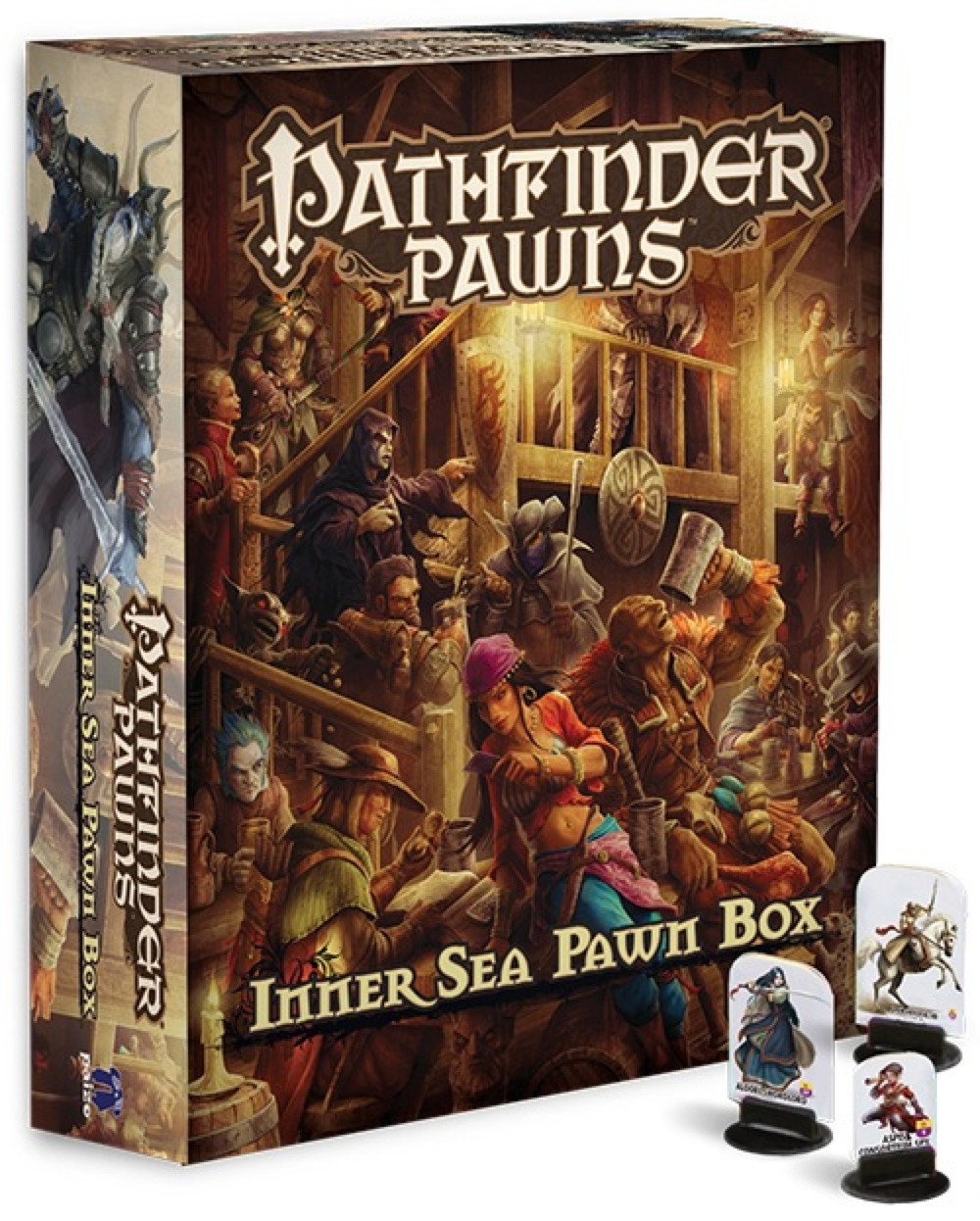
GURPS-Finder is likely a go. After my gaming area in the water-damaged den is rebuilt, I am setting up my gaming table, breaking out my six crates of Pathfinder pawns, bysting out my hex tiles, and putting them in waterproof containers on the space's shelves, just in case it happens again.

I do not care too much about the 3.5E rules, nor do I care too much about simulating everything in Pathfinder, nor the world. I am happy with a straight GURPS Fantasy experience, more grounded and realistic, with low-magic, gritty combat, and all the great things GURPS brings to the table. I want the world to feel real and grounded, and GURPS brings it.
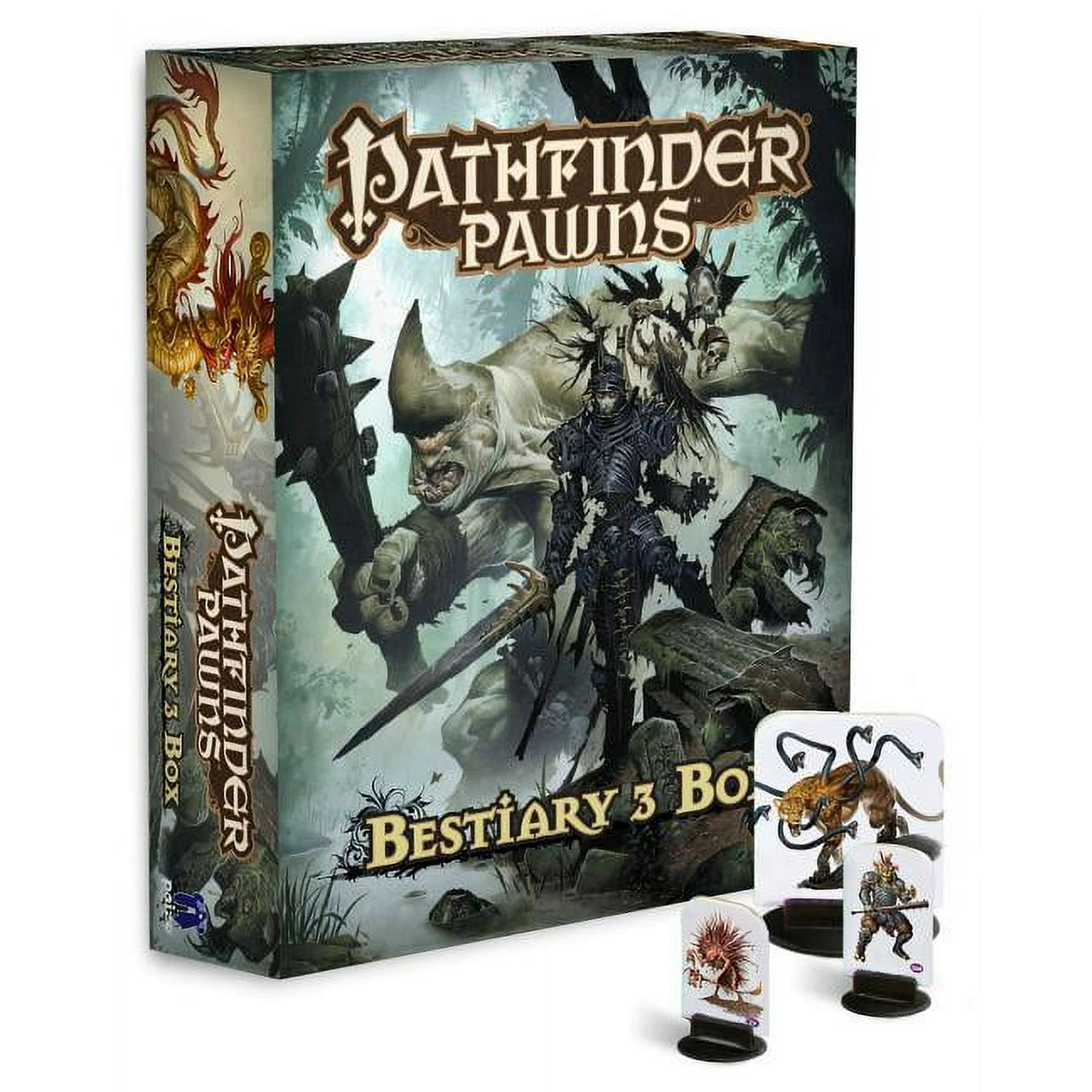
I am not pulling out a library of Pathfinder 1e books; I have the PDFs, and those are just reference. To be honest, Pathfinder is just the "look and feel" of the world, serving as "generic fantasy pawns" so I can play the game the way I want. Granted, I likely have more monsters than I will ever use, more shapes than I could ever create stats for, and unless I limit this down to a core set of pawns, it will overwhelm me quickly with just the ones I have out from the Beginner Box.

I could honestly play with just the ones from the Beginner Box and have more than enough pawns for an entire campaign. Where Pathfinder and 3.5E, and by extension, the OSR and D&D, tend to be "macro" with many varied shapes having similar AC, hit point, and attack stats, GURPS monsters tend to be more detailed and interesting. Dragons alone can do a lot of things in GURPS, and the stat blocks for one can easily go a page in length of powers, defenses, abilities, and other design choices.

GURPS monsters are, by and large, far more interesting than their d20 counterparts. Just one can be a threat, where, again, in d20 games, you tend to need a dozen humanoids just to fill out an encounter and to give the game's AoE powers utility and worth.

That fireball spell? Save it for room #8 with the 40 kobolds, or be prepared to slog through melee all night. Some of the D&D's original tournament modules were designed this way, as puzzles to figure out with the one-shot powers of the party. These days? Here is a short rest. Please get all your AoE spells back. Thank you for playing.

Then again, I have no problem estimating a ST and hp value, and giving a monster a "bang skill" in GURPS, such as Black Dragon 20-minus, and estimating the strength of attacks, level of defenses, and special abilities from that. Simplified monsters may be the way to go for a more pulp-action, fast-and-loose game.

Part of me doesn't want that, and I want the gritty realism where having plate mail in the party means thinking about running a logistical supply chain to support storage, hauling, asset protection, and repairs of your high-end gear. This is how it worked with knights in medieval times: plate mail was not cheap, nor was it casual, everyday wear. They needed squires and an entourage to support that "main battle tank" lifestyle.

In many OSR and D&D games, the brain gets turned off, click, and plate mail becomes something you pay for once, set an AC value, and forget about for the rest of your character's adventuring career (until it gets upgraded to a magic set, then that is next to be forgotten about). Pathfinder 1e sort of holds that model up as an ideal. Once you buy plate armor, forget it; that set becomes a permanent part of your character's skin, and it never needs to be thought about again.

With some GURPS characters, I can carry around two sets of armor, plate for the heavy fights, and a lighter set for town adventures. Now, the supply chain is needed.

It is the same with magic. In Pathfinder, bam, you get the good stuff right away. In modern fantasy gaming, it is even worse; you are getting infinite-use attack cantrips glued to your hands that permanently give you a "laser pistol" to fire off every turn, with no cost or limitations. This "MMO-ification" of the fantasy RPG is one of the worst things to happen to fantasy gaming. Magic without a cost and price is not magic; it is a "video game shooter power" that players get trained to expect, or the game "isn't any good."

The GURPS Dungeon Fantasy game forces you to buy cantrip-like spells, like affecting fires, far before you ever get to a fire-bolt-like power, and it all has a cost. Even if it is ever reduced to a zero-cost spell (through high skill), there is still a skill roll involved, and that could critically fail. There will always be a cost, be it hitting a friend, corruption, mutation, or some other strange and unexplained effect on a critical failure.

Minor, "cantrip" magic is cool in GURPS, where in D&D, it feels like a joke. There are so many fun things crafty mages can do with the lesser magic spells, and I find constant uses for them. If you can put out a torch in a room full of guards and sneak by, all the better. Mages are tricksters in GURPS, where in D&D, they tend to be boring DPS classes.

Magic in modern fantasy games gets boring since there is so much of it.

Magic is the unexplained and mysterious, just like the mystery of life and death. Take that away, and magic is not magic. You live in a silly video game-land where power is entitlement. Fantasy is not fantasy if it is a "tabletop MMO," and this is how D&D 4E utterly failed. We still see those same D&D 4E "World of Warcraft" design goals in fantasy gaming: a removal of the mystery for the certain, being able to plan and explain everything, guaranteed power for all classes, the removal of death as a mechanic, turning the game into a cozy-lifestyle experience where players are expected to "log in and buy cosmetics" every day.

Why do I want that? I get it easier by paying someone else $15 per month. D&D is just a slow-playing MMO where they expect you to pay $200 up front for books and to read a thousand pages of instruction manuals. Then again, if there are no RAM and video cards left because of AI, maybe this is how the MMOs of the future will be played. I will flip the sarcasm tag right here, but you get the point.

There is a chance I just give up on the pawns and do my own thing. I like GURPS tactical combat, and the fantasy battles are amazing fun. I could probably simplify this idea and have more fun by limiting the number of pieces I pull out. Maybe a smaller game with less will be more fun.

I will take things as they go.

Tuesday, February 3, 2026

GURPS-Finder

I have about eight boxes of Pathfinder pawns, mostly for Pathfinder 1e, the D&D 3.5E version of the game that I loved (you can tell by the stylized cross on the "P"). This was the original world, Golarion, still raw, where demons roamed, slavers preyed on the weak, kingdoms made pacts with devils for power, flesh weavers butchered the innocent in magical experimentation, forgotten empires scattered the world with fallen ruins, and savage monsters terrorized the land.

The new Golarion and Pathfinder 2E, I am not as much of a fan of, since a lot was retconned and removed from the world. The new world is more fantasy-modern cosplay pastiche and less Conan fighting dragons and freeing the world from demonic slavers. They went their own way for a more family-friendly setting, filled with steampunk, cute races, and faux-modern anarchisms, and good for them. They do what they feel they need to do to compete with the D&D audience, and the market has changed.

But this is not the world of stark contrasts and good-versus-evil I fell in love with.

I am still a fan of the original Golarion world. The art, vibe, feeling, and "this is not D&D" mantra of the world, aimed at "the cool gamers," were awesome in the late 2000s and still hold up today. This is where the cool gamers played. D&D lost its savage swords & sorcery mojo with D&D 4E, and it never came back. Pathfinder 1e and its original Golarion setting are one of the last times that a major Conan-style setting in a D&D-like game was published.

So, what do I do with eight boxes of Pathfinder pawns?

Well, I do have a lot of mega-hex tiles from The Fantasy Trip, and these go wonderfully with my pawns. The Fantasy Trip and its mega-hex tiles are like the peanut butter to the chocolate of GURPS, and being able to put together twisting hex-labyrinths is an amazing thing to do on my gaming card table. This is really good gaming, and my Pathfinder pawns and these tiles are incredibly good GURPS gaming, almost like a fantasy wargame (like TFT, but GURPS), and they sing so well together.

So I either play a GURPS-Finder game and rebuild the entire world as a GURPS-style savage sorcery world, or I use the pawns for my own world. Even though the Pathfinder world is a strong one and filled with amazing places and adventures, I am not tied to the Golarion world as strongly these days due to the retconning, and the changes GURPS would bring are dramatic enough that they would alter the role of everything in the world.

I would like a lower-fantasy world where magic is rare and special. There is a realism and grittiness that GURPS does extremely well, where the default high-fantasy D&D 3.5E to 5E puts magic in everything, and magic has this "free" feeling that reduces the importance of normal people in the setting. With GURPS, a 22-minus in blacksmithing makes you an extremely valuable and skilled craftsperson, and that one skill means a lot more than untrustworthy and other-worldly magic.

Magic as an other-worldly and alien force is the key here, and it is almost a Lovecraftian view of spells and casting. All magic has a price, in the physical, corruption (out of GURPS Horror), causing strangeness in the local area, alliance with demonic forces, or having other disadvantages that make the average person very distrustful of the practices of the arcane and those who flaunt their magical prowess.

Similarly, the cost of divine magic should weigh heavily on the faithful. A cleric of one god may not be welcome in communities that worship others, and that suspicion and distrust would run deep in a world where faith equals direct power. Imagine if organized religion in this world had access to magic powers and the ability to cure diseases and restore life? They would be the government, or control most of it through their influence. What would the wealthy give to practically live forever? What would the faiths ask of them?

Also, the war between arcane casters and the divine would be one over true and societal power. Some faiths may declare arcane casters heretics just out of "who controls magic" and send out inquisitors and launch crusades on lands where arcane casters are welcome.

Think seriously about consequences, and you will find a lot of cool things to put in your games. The original Golarion conveniently forgets about most of this cause-and-effect due to needing to implement the 3.5E modern fantasy model. Part of the reason I call out the modern fantasy genre is its default assumptions, and stripping back those assumptions gives us much more to build compelling stories with.

Don't assume everything in the OSR, 5E, Pathfinder, or BX is some absolute truth about the fantasy genre. Most of it is derivative of older, far superior works: the Iliad, the Bible, mid 20th-century epic fantasy, and pulp fantasy fiction.

What is true in fantasy comes from inside you. What interests you? Where can you tell your best stories? What does the genre mean to you? Too many games, movies, and media tell you how you should think or what something means.

Meaning comes from you.

It should reflect something within you that you would love to explore and connect more deeply with.

If you feel magic is extra-worldly and should cause corruption or divine consequences, like out of GURPS Horror, then this is what magic should be in your setting. For divine magic, I could start picking disadvantages like vows and duties, being hunted by demons, getting an angelic halo that has drawbacks, auras that cause others to react differently to my character, or other similar changes. Growing wings like an angel could be a combination of an advantage and a disadvantage, but there is always a cost.

This is what magic means to me.

Not spell slots, spell rolls, or a simple fatigue cost.

But the magic in my world helps tell a story that means something to me.

Once you shed the "D&D mindset," you can worldbuild more creatively and craft compelling drama and conflict, which the D&D model tends to diminish. D&D requires "any party to be able to co-exist," so the company can sell you more "dungeon adventures." With GURPS, I can clear out the corporate assumptions and layer in all sorts of conflict and drama that a D&D world isn't designed to handle.

D&D and the modern fantasy mindset do not want intra-societal conflicts across any race, class, or background. This creates intra-party conflict, trouble at the table, and reduces the company's ability to sell "generic adventure" books. In 3.5E, we still had some of the classic nods, the half-orcs, the half-elves, the alignment system, and hold-overs from the OSR style of play.

The inner conflicts in the rules were swept away as the fantasy genre modernized. It is a sad thing to see, since I love the classics, and I don't like the edge being dulled off fantasy.

We are losing fantasy, and it is becoming a modern allegory.

And what I was talking about is just the conflict between the divine and arcane. Introduce the devil-blooded Tieflings and blood-of-dragons Dragonborn into a world, and you will have even more conflicts. Would a kingdom of humans see the Dragonborn as "secret allies" of the dragons and their humanoid barbarian hordes? That suspicion is a powerful thing, something to fight against constantly, and a great story conflict. The same could be said between demons, devils, and Tieflings. The deep-rooted distrust that they are "agents of Hell" would run strong, making for a great conflict in storytelling.

I am tempted to rebuild Golarion, but it may be too big a project for me, and I would be happier with my own small world, using the Pathfinder pawns and looks.

Still, a GURPS-ified Golarion sounds cool if I start small. This version of the world will have hex-dungeons, though, because hexes are cool.

The best thing about GURPS is that I can take any setting and make it mine.

Thursday, January 16, 2025

Ignore It All, Play GURPS

When the dust settles, I will return to GURPS, using my Pathfinder pawn collection on my Fantasy Trip hex grids. I love my pawns and plastic stands, I have about three shelves full, and these are such great miniatures they are great for many games. I also have a few of the Starfinder ones, and these make extraordinary sci-fi figures.

I like Pathfinder, I was giving the second game a try, but whenever I try something new and give it a chance, the entire community blows up, and I want to shelve the whole game and forget about the negativity and mess. This also happened with 5E, and part of why I play a game is to escape the darkness and negativity of the real world. This will end in a few months, but I am unhappy with all the negativity.

The best part about GURPS is the community. This is such a fantastic place; it is welcoming, there is little drama, and people mostly know better than to be idiots. If you love GURPS, you are here.

One of the best parts about GURPS is that GURPS is everything. GURPS is Star Wars, Pathfinder, Star Trek, D&D, Space Opera, Star Frontiers, Gangbusters, Runequest, Traveller, James Bond, Dungeon Crawl Classics, Cthulhu, Alien, GI JOE, Walking Dead, Marvel, DC, whatever movies you love, your favorite book, anime, TV show, and everything else.

And you care less about rules in GURPS and more about characters, stories, and settings.

Many other games push this "rules first" mentality, where the rules define the experience. In GURPS, the "physics" of the world remains the same "simulation-based" reality as the world we live in. The fantastical elements (magic, superpowers, etc.) exist outside the normal but still realistically interact with the world.

The people in all these worlds are mostly the same. A 50-point anybody in Star Wars is similar to a 50-point anybody in a fantasy world. The skills and equipment will differ, but the stats and skills will be comparable.

But the complexity in GURPS is in the characters, where it belongs. Everything else is rules-light primarily. GURPS Lite can get you through through 90% of most games.

And Ultra-Lite makes NPCs and most monstrous foes simple. Stormtrooper?

  • ST: Normal, 10hp, 1d6
  • DX: Normal, 10
  • IQ: Normal, 10
  • HT: Normal, 10
  • Skills: Stormtrooper 2, +8.
    • Armor 4
    • Blaster rifle, 5d6+2

It is simple. More straightforward than the OSR. What does this stormtrooper hit on? 18-minus with the standard -6 "trained activity" modifier, which is a 12-minus base, modified by the normal -10 to +10 modifiers. They don't hit much anyway; their armor is pathetic, but enough of them will turn you into blaster Swiss cheese.

That stormtrooper? Same stats as a "guard with a crossbow," and just throw a realistic reload time on there for that one-shot ranged weapon. Also, the crossbow will do 1d6+2 damage since that aligns better with GURPS Lite's crossbow damage. Armor is 2 in light or 4 in heavy; there are bonus points if you make the heavy armored one slower. The skill, of course, will be "Crossbowman Guard," which will be used for all combat, guard skill checks, and other rolls.

UL also makes customizing these stat blocks a snap. Move a few levels into abilities and skills, and suddenly, your opponent is more formidable or weaker. I can throw a level of ST on there for a strong orc (14 hp, 2d6) or pull a level of ST and HT off for a weak, sickly goblin (8 hp, 1d6/2, HT 8). Want D&D 4's minions? Limit their skill levels to one and let them miss all the time with that 8-minus trained skill roll.

These Ultra Lite characters are 95% compatible with the full GURPS rules and more straightforward than 90% of every other game on my shelf for an NPC. A Pathfinder 1e or 2E crossbowman? A half-page block of stats and text.

Any one of those IPs, games, movies, TV shows, or other settings I mentioned? That crossbowman or stormtrooper can be reskinned in those settings and serve as your "mook" enemy type. Your orc, goblin, random guard, thug, space alien, enemy soldier, zombie, bad guy, or what have you.

These stat blocks can cover 50-75% of the monsters you need in a fantasy game, with the outliers being dragons and the like - but I bet if you knew dragon stats from other books, you could come up with numbers and skills that make sense.

In a pinch? Come up with a stat block and use OSR "rolled" hit dice as hp. Level 3 dragon skills, a few stats, a hacked hp, and armor value. A few special attacks and defenses. 90% of OSR monsters can be quickly ported in, and the stats are far less complicated.

Thursday, December 26, 2024

Genres & Games Reorganization

GURPS survives every reshelving and storage run with my library. It occupies my "best shelf" constantly, and I don't see it ever moving. Other games come and go, and the biggest loser this season is 5E; that game is far too huge for its own good; my collection is nearly a dozen boxes, and the game is bloated, unplayable, and makes the sin of relying on computerized character creators to manage it all. The more you buy for 5E, the less happy you are since nothing is supported in one place.

At least with GURPS, I have the GURPS Character Sheet (sidebar link; please support the project), which covers everything the game has published and everything I will ever add to it.

Losing 5E freed up space on my shelves for a few other fantastic games. GURPS, of course, does them all, but some are still worth playing and checking out. I am finding that the "alt boutique" style games, which take one game and slightly tweak it to "play better," are also becoming big losers in this round of shelf shuffling.

Why do I need Castles & Crusades, Shadowdark, Old School Essentials, Swords & Wizardry, and many other games (that I still love) when I have OSRIC and my PoD copies of AD&D (not for play, just for Gary's wisdom)? OSRIC is my Rosetta Stone, while AD&D is like Lord of the Rings.

Sometimes, I want to return to those first days, fire up the time machine, and be there again. None of the new games, OSRIC, or my inspirational material does that. Compared to the OG game, it is all "second source photocopies." AD&D powers the time machine, and OSRIC gives me the rules.

And yes, I get it. Why not just play Dungeon Fantasy? I have everything I need right here, plus GURPS! While I love Dungeon Fantasy, we did not need this in the 1980s when we had GURPS. In fact, GURPS was superior to AD&D, and it did not have to "play to the genre" since GURPS was every genre and every type of game rolled into one.

The "dungeon fantasy" genre was really championed by D&D 3.0 when Wizards took over and turned D&D into a board game, which was cool. They rolled it back massively with D&D 5E, and the game is more theater-of-the-mind. Back in the day, this was "fantasy roleplaying" and not "dungeon roleplaying," if you get my drift. There is a clear difference between the "fantasy" and the "dungeon" genres, and extending this further, D&D 5 is in the "epic heroic" genre more than it is in the other two and arguably closer to the storytelling game FATE.

Sometimes, I feel "playing to a genre" lessens the game. I enjoy Dungeon Fantasy a lot. Still, if I am in my time machine, I am comparing GURPS (3.0) with AD&D. I am limiting my comparisons strictly to the "fantasy" genre without having to pull in all the "needed lists" that must be present for the "dungeon" genre to feel well supported.

Need examples of the fantasy genre? Go back to the classics. Robin Hood, Conan, King Arthur, and even John Carter. GURPS does these out of the box, even with the basic rulebook. You have characters, a low technology level, rare magic, monsters, sword swinging, and many skill tests.

AD&D started more in the fantasy genre, then it was overtaken by the dungeon genre, slowly developing the "dungeon genre," which was once seen as a lesser genre than fantasy. If your game "only did dungeons," it felt less capable. Given that D&D 3.0 elevates the "dungeon genre" to something akin to a professional sport, this comparison is completely flipped on its head. The "dungeon" is seen as "fantasy," and the traditional fantasy genre has been forgotten or is seen as a lesser genre - at least within gaming.

These days, Pathfinder 2 holds the torch for the dungeon genre, given its massive development efforts, strict balancing, and almost religious adherence to its standards and tropes. This is the standard-bearer game. D&D 5 has moved on to epic heroic storytelling and is in the "live play" genre. Even though D&D 3.5E is in the same tactical dungeon genre, Pathfinder 2 is supported and works hard to fix the near-constant imbalance issues. D&D 3.5E is still very broken. 

Pathfinder 2 recently ditched the OGL and SRD, and the game is better for it.

GURPS and Pathfinder 2 are tactical dungeon battle games where "builds matter on the board."

You are not in the dungeon genre these days if you are not delivering a tactical board game. This is mainly due to expectations, and the complexity of character builds in these games. You need to "prove your build on the board" in a dungeon genre game, and there is no real good way to do that in theater-of-the-mind gaming. Especially if part of combat is positioning, pushing, reaction attacks, line of sight, vision, movement, and any "on the map tangible" design element.

Pathfinder 2 goes the extra mile to codify skill use in combat and gives those defined actions to attempt. Pathfinder 2 is the model future GURPS development should follow. Clearly define everything that can be done, and then balance the heck out of it. While you are at it, make every choice equal and enjoyable.

The most significant difference is that Pathfinder 2 puts everyone on the same level of progression regarding combat power. GURPS lets you make that choice yourself. Pathfinder 2 is the more straightforward game to balance and creates encounters for, but that comes at a price.

GURPS does both fantasy and dungeon genres well, with a realistic filter over the game. It also delivers a tactical board game. The fantasy genre gets forgotten in the hype, marketing, and advocacy. In GURPS, you can lean into the storytelling side more effortlessly than in Pathfinder 2. My "Robin Hood" does not need a "class built with archetypes" and a "carefully crafted combat style." My Robin Hood needs skills and abilities to "do that RP stuff."

Suddenly, Pathfinder 2 feels like overkill to play Robin Hood or King Arthur.

Even Dungeon Fantasy feels like overkill, to be honest. Why am I messing with all these class templates? Why 250 points? Where is the "enemy disadvantage" for the sheriff and his men?

The average customer in the gaming market cares very little for any of these distinctions; they just want to play "Critical Role" or "Robin Hood," and they will pick up any game with a fantasy scene on the cover. They will notice if the game makes them do too much work to have the experience they seek or if parts are missing, ones they expect to be there to deliver on the promises in their heads.

GURPS is the best middle-ground in all of these cases. You can have tactical play and depth. You can have rules-light story-gaming. You can have the classic "fantasy" genre without all the dungeon cruft, or if you use Dungeon Fantasy, revel in the "dungeon" genre.

But it isn't the "best in class" game in the tactical or dungeon genre, and it could be argued that it is a matter of choice in the story-gaming genre. GURPS (base rulebooks) is still the best-in-class game in the traditional fantasy gaming genre and has been that way since the 1980s.

I can design my Robin Hood or John Carter character and not worry about classes, tactical abilities, class templates, or +1 swords; I can define a character through skills, abilities, advantages, and disadvantages—and I'll be playing the superior game for the fantasy genre.

Saturday, December 21, 2024

GURPS in 2025

I am starting a few new GURPS campaigns in 2025, but the end half of 2024 has been tough. Right now, I am cleaning out 40 years of games and putting things in storage. I will unbox a game, put it on a shelf, see if it interests me, and then box it up and realize I don't have time for it or I have better.

Some never go away and never get boxed up. GURPS is one of them.

OSRIC and first-edition dungeon gaming are another. The entire D&D concept has been warped into an unrecognizable state today. This isn't even the same game I remember. When I go back to basics, this is where my inspiration and truth lie.

There is one fork of modern D&D that I like. It started in D&D 4th Edition for us, with the "tabletop dungeon board game" playing a central role in the game. This fork started in D&D 3.5E, went to D&D 4E, and today, it lives on in Pathfinder 2E. The whole "figures, dungeon tiles, and d20 gaming" only exists in that form here, and to be honest, the genre is very close to GURPS' hex-based adventuring.

Pathfinder 2E is a sister game to GURPS. It has pre-chewed character options and adopts polyhedral dice as randomizers. If you want it "on the table" and like that tactical hit, play GURPS or Pathfinder 2E and forget everything else exists.

Everything I like about gaming is lost when you go to the rules-light or theater of the mind games.

Also, a lot has been "done for me" in a game like Pathfinder 2E, and I can spend weeks converting it to GURPS with time I don't have or just open this and play for a while, exploring what the designers did with the game. They have good ideas and fresh takes here, improving the characters I build in GURPS since I have external inputs and things to reflect upon.

GURPS, for me, with the fantasy genre? I am still reflecting on what I like about it. There is a "thing" there, a place I want to be; I just haven't found it yet. I don't want to simulate kitchen-sink fantasy, nor do I want to convert endless spells and monster lists. GURPS can do much more than emulate; it can create something new. If I play GURPS in the fantasy genre, I want magic to be strange and mysterious, something that reflects the person. I want monsters to be myth-like representations of human weaknesses and sins. GURPS tells those stories much better than it does, emulating other games.

At least for me.

I am also playing the excellent American Truck Simulator (ATS) on my PC over the holidays and reflecting on how stupid the "Traveller cargo model" is. Science fiction RPGs have been stuck with this 16th-century "the captain buys the cargo and sells it somewhere else" model of merchant campaigning, and compared to ATS, it makes the entire "space game cargo model" seem stupid.

In ATS, you aren't randomly buying air conditioner units in one town and taking them to another, praying somebody wants them. No, a company is hiring you to haul them and get them from place A to place B intact because they need these units there, and they need them there now. You can see why when you drop these cargoes off at job sites, factories, food processing plants, truck dealerships, and every other location in ATS.

You are a part of a larger economy.

And all the while, you are dealing with the little things that could mess this up: fuel, sleep, idiot drivers, produce inspection stations, weigh stations, local laws, what lanes trucks can drive in, and how fast, hazardous cargoes and getting certified to haul them, trailer types, jobs that are just not available, or there are too many good ones, and you need to pick and choose your destination, repairs. You learn the terrain and the skills required to get across it safely. You know all the things truck stops and garages do and need to keep this truck running well.

Even using mirrors, lights, and turn signals is essential knowledge.

And you get to run a company with drivers, and you need to manage garages and trucks.

If you are into space gaming, and your merchant campaigns fall flat because they fall into the "roll cargo, fly somewhere, and sell," play this game to the point where you buy a truck and learn the game. Learn how to back up. Learn how to repair your vehicle. Learn when to gas up and rest. Obey the rules for weight stations and produce inspection stations. Learn the laws and read the signs. Learn how to navigate.

You could "work" for just a company in this game, take their loads, and learn how it feels to be a company hauler. In a space game, if a company is terraforming a world, that is an almost insane amount of cargo, machinery, construction equipment, habitation pods, and other "stuff" that isn't made locally in that target world. And terraforming operations can last hundreds of years, and the "flavor" of the cargo will change over time.

You could just play that as a part of a single campaign and get to know the drop-off points, who lives there, the local space militia and law enforcement, what problems they have, what they need, the company managers on-site, and you will build this world in your mind as you haul there.

Many of today's science fiction games have this "hop around" mentality where "new backdrops are fun!" While ATS has "varied backdrops" in the places you go, it focuses on more than one part of that experience, changing how I think about science fiction gaming.

Just replace the trucks with starships, and you have an excellent science-fiction game.

GURPS would do this type of game exceptionally well, and you don't need Star Trek or Star Wars to support it. Fantasy, for me, is the same way. I don't want D&D to prop up my GURPS Fantasy game. I want to find something GURPS can simulate well, without emulating anything, and focus the experience on that.

GURPS also has "fine-grained" skills, and I will need a crew to cover what I don't know but need. GURPS Ultra-Lite can fill those NPCs just fine, and I don't need to spend days creating a crew. Are we hauling hazardous materials? Let's hire a hazmat specialist for this trip only. Do we know any, and are they on-planet? Would hiring them as a permanent position make sense, since we haul these high-paying loads often?

Let's do the math.

For me, this is where GURPS shines. I get a world model and concept built in my head, like, "What if ATS was a space trucker game?" GURPS makes that dream come alive. However, the idea for the game comes from the outside and doesn't originate in emulating other games. The entire ATS concept "in space" is mind-expanding and strong, especially diving into the level of detail this game forces you to think about.

To me, the kitchen sink fantasy is like the Traveller cargo-hauling model. We assume "it works there" so "we can port it in" without looking elsewhere and asking, "Can't we do better?" ATS has forever changed my mind on merchant campaigns and cargo hauling. Better models exist that can tell better stories. Recycling other games is not how we find them.

I want to find that in the fantasy genre, which must come from outside of "fantasy roleplaying."

Sunday, September 29, 2024

Please Let Me Design the Character I Want

In my recent gaming adventures, I've delved into the world of Tales of the Valiant, a new 5E game by Kobold Press. It's a compelling alternative for those who may not be fans of Wizards. However, the electronic character sheets in Hero Lab, while functional, seem to have been left in a state of limbo, with no new updates or content for months. I have not been able to buy anything for the designer since it came out (remember this point).

I still like ToV for the "clean room" 5E it is, and it lacks the barrage and drama of D&D 2024/5. It is a good system if you are stuck using 5E.

I am also comparing it to Pathfinder 1e, the classic 3.5 system that refuses to die for me. Pathfinder 1e is my peak, all time best, d20 fantasy game. Having a complete set of books for this makes it hard to play this "D&D style sword & sorcery" with GURPS, so I use GURPS for dark fantasy, gritty fantasy, and other fantasy genres. Pathfinder 1e has never been topped, and I know how broken this game is. Like GURPS, it has exploits up the wall, and we house rule and disallow the obviously broken parts.

So, why bring these two up?

I can design fantastic characters in Pathfinder 1e with the Classic Hero Lab. I did a dual-wielding, short-whip plus short sword drow cleric who wears leather armor. She came out great, so I said, hey, let's try to design her in 5E!

No, please, no, don't.

The 3.5 rules have a relatively open feat list, which allows you to give clerics a two-weapon fighting feat and even weapon finesse to reduce her penalties to a +0 on each hand, so she is doing a d4 and d6 attack every turn with a DEX of 15. All she needs is combat casting, and she is complete. Though I could replace her weapon finesse feat with that, give her a -2 in each hand, and improve her combat casting. At low levels, I will cast spells out of combat and stick to hitting as much as possible until I get that feat when the spells get good.

But designing her in 5E? The designers know better than you. Trying to get a cleric proficient in martial weapons is hard enough, and dual-wielding is out of the question. I was trying to design her with my tools and ran into these "not in our design" roadblocks at every turn.

The trouble is, she is a valid character archetype! I could see a drow cleric like that in my world, using her whip to pull enemies toward her for a quick stab with the short sword. The problem is that most 5E designers can't, and they don't allow you to design anything remotely creative or fun. Between 2024 D&D and today's versions of the game, your options and creativity have gone down to what the designers allow you to do and nothing more.

In ToV, I am the classic D&D plate priest or the cloth-wearing World of Warcraft priest.

She is boring and, in some games, limited to blunt weapons only.

Again, the West Coast "big tech" design philosophy of D&D and these other d20 games comes up, and I feel I am playing a mobile game that won't let me do this with one type of currency and not something else with another. The shell game of 5E involves the designers laying out a maze of options for every character build, forcing players to go to Internet forums to find the best one. Eventually, the really broken stuff gets errata, and the best stuff is the new balance baseline for the next monster book. Everyone else "doing their own thing" gets left behind and seen as amateurs.

More often than not, the designer of a 5E game tells you what you can't do rather than what you can.

Pathfinder 1e, though my all-time great, still needs to catch up in many places, and I had to pay a lot of money for books and Hero Lab expansions (remember what I said?) to get any level of flexibility. This is another pillar of West Coast design theory, taking away as many options as possible in the base game and forcing players to pay to get them back, one at a time.

You can design your dream character once you give the company and its partners a few thousand dollars. This also puts the "sunk cost" strategy in play, where the whales will be vocal about "defending their investment" online, and you get these vocal advocates on social media who have the incentive to turn the hobby into a combat sport to justify all the money they wasted on a West Coast design.

I am being sarcastic and cynical here, and that scent of vinegar is in my words since I am cleaning my coffee maker today, but all this is true. I spent a few thousand dollars on Pathfinder 1e over the years, and I only now have the flexibility I have with the eighty-dollar Dungeon Fantasy boxed set.

I created her in Pathfinder 1e; the flexibility comes within 10% of GURPS. Pathfinder 1e has a lot of options, and I can build a wide variety of character types, but GURPS just blows any of these "dungeon crawl" games out of the water in terms of character design.

Very little here tells me what I can't do.

90% of GURPS is options telling me what I can do.

If it doesn't exist, I can design and have it myself. In West Coast games, I pay for a few options at a time and hope I get what I want someday. In GURPS, I have the full power of the game designer.

I can design her in GURPS easily, and better than even Pathfinder 1e with a bunch of custom spells she can use in her unique fighting style. Is she "system optimal" in GURPS? No, there are clearly better combat builds than hers, but her distinctive style of whip-and-short-sword is a fun, classic drow, evil-fighting style I can see enhanced by her dark cleric magics that I can give her in Dungeon Fantasy.

In Pathfinder 1e, I don't have many "combat enhancement" spells as a cleric, whereas, in GURPS, I can make a bunch of new whip and short sword spells if I don't have them.

The only thing West Coast games have over GURPS is ease of use. I can pop in and play with Pathfinder 1e, though character design takes just as long with as many books as I have. Still, when I play, there are many tables and random charts to make playing the game easy, along with giant lists of monsters and treasures. I have samples of NPCs created. All the spells are there. The magic items are plentiful. Everything is done for me. Though 90% of it I will never use, it is there.

When you boil it down, lists are just worthless lists.

The character is the heart of the game.

And if a game limits my character, it limits my fun.

Monday, July 22, 2024

Leveled Fantasy Worlds

Your typical fantasy world from B/X to 5E only makes sense if you treat the world like a videogame. Shouldn't high-level NPCs and monsters dominate the world, controlling kingdoms and exclusive knowledge? Won't groups band together to "level up" all their friends and become the most potent factions?

Otherwise, the world could become imbalanced, like in the 'World of Warcraft' MMO, with zones of levels 1-10, 11-20, and so on. Maintaining balance is crucial in game design, ensuring that all players can contribute to the world regardless of their level.

Most of the time, the world "levels up" around the characters. This is the easiest way to handle it, and it avoids the headaches of leveled areas. However, "world-leveling" is not always compatible with a sandbox-style game.

One challenge I encountered in my Pathfinder 1e conversion was the ingrained levels of the creatures. However, this also sparked a creative process. I reflected on the power of some monsters as 'X times human' and attempted to translate this into my monster conversions for GURPS. This process of adaptation and creativity is one of the most rewarding aspects of role-playing game design.

You can play GURPS that way like giving monsters 50 to 100 character points per B/X hit die and roughly designing them off of that number. You could do a "realism spec" and mirror existing animals of the same size as base GURPS monsters and then tweak from there.

Yes, you can play GURPS in this sort of "leveled world," with monsters getting stronger and stronger for "video game reasons." It differs from the standard way of playing GURPS, but it can be done. The concept of "CR" never meant anything in GURPS, and it will mean even less now as 8-10 HD creatures suddenly become "boss monsters" and single 20+ HD creatures become demi-gods and almost unstoppable like epic-level superheroes.

If you want to convert HD to GURPS character points, you can do so. Your world will be a strange world where high-level creatures become epic challenges. D&D has always had this problem with monsters being "bags of hit points with a funny shape." Many D&D monsters are a little different than similar ones, like one monster being the armored brute at 3-6 HD and another at 14-18 HD being way too similar in attacks and powers; one is just the high-level version of the same archetype.

More is not more.

And I likely made a mistake with that conversion.

Pulling out the "realism ruler" and rating creatures on a flatter "skill-based" scale is always better. This is how GURPS does most everything, basing statistics and abilities on a real-world base rather than giving Naga snake people 8 hit dice just because characters are supposed to fight them around the 8th level. In GURPS, it is better to "size" a creature around something tangible, like a giant turtle based on a rhinoceros stat-block, then modify from there.

When you do a GURPS conversion it is like "X Setting: The Movie" and things look like the things in the books, but nothing is rated on some "game style" power scale. Things are more realistic, and monsters and heroes are on a flatter power curve. You can still have a dragon the size of a building, but nobody is going to be fighting it for four hours of the film's runtime.

In GURPS, take a real-world animal of similar size and ability and create your monster using that base. When in doubt, find a monster like the one you are imagining in GURPS and use that as a base. 80% of the time, you search for a beast already converted in one of the 4th or 3rd Edition books. For the other 15%, you are using something in the same ballpark and using that. The last 5% are actual conversions.

And 70-80% of the creatures in typical B/X games are already given stats in GURPS or Dungeon Fantasy somewhere, so you rarely need to convert much. Dungeon Fantasy has come a long way to defining power levels in the "dungeon crawling" side of GURPS; everything from the spells to the monsters makes sense in a way that D&D and many d20 games just guess at or "throw more hit dice at" to balance a monster.

The "old way" of the hit-die scale to put monsters on a power curve is an artificial construct of D&D.

It has been the same since D&D 3rd Edition when they introduced power and damage scaling. Suddenly, DPS per turn started going up with magic and multiple attacks. Wizards' D&D isn't even D&D, and the high-level math and scaling are all wrong compared to the original game. It is only close in the first three levels.

One of the best things you can do is ignore it all. Just use the pretty pictures of Pathfinder 1e, play in that world with the GURPS rules, and forget all the "fake" 3.75E numbers. They are all wrong anyway. Realism-base your world, ignore the math, and silly leveled this and that.

If you have played Pathfinder 1e as long as I have, it can be challenging to let go of those numbers.

You almost have to go "cold turkey" and let realism and the natural balance of GURPS guide you.

Sunday, April 14, 2024

Are Conversions Even Worth the Trouble?

Some games are so large that they aren't even worth converting. They showcase a world, adventure path, and rules where everything is part of a whole. I picked Pathfinder because I have a massive collection of 1e pawns perfect for hex-based battles.

I am still working on a " Pathfinder-flavored" Dungeon Fantasy game since I have the pawns and background material. But converting in every spell, magic item, class, and power is off the table. This will be straight Dungeon Fantasy wearing a Pathfinder 1e look and style, much like the excellent Savage Pathfinder set of rules (without all the conversion).

I will likely base this around everyone's favorite starting town, Sandpoint, since it has a book of information and is as iconic to the game as the Keep on the Borderlands module. I would modify the town, the underwhelming dungeons underneath, and the sparse pickings in the overland map to add more dungeon locations and excitement to this map. This book assumes the Rise of the Runelords adventure path is completed, so take note of that.

That said, the 3.5E era Rise of the Runelords adventure is also a good resource, and if all Pathfinder 1e was is the core books and this module, that would be a lifetime of gaming or converting over for Dungeon Fantasy. A word of warning about any Pathfinder adventure path: there are places where they actively discourage exploration and expansion of locations and source materials, which is annoying. I know why they do it, to "keep the story moving" and "hustle the party along to the next place."

Because if you stick around in one place too long, you will gain levels and power, and the next part of the story will be a pushover. The appendix for the book above contains an ancient city, and it goes out of its way to say, "The real loot is in the tombs" and "Don't be scavengers here."

Seriously?

Sandbox, you ain't.

Old-school TSR would give you places to expand your adventure in every location. They would dot the Sandpoint landscape with ruins and exciting locations. Every chapter of the adventure path would be full of places where the game master could expand the area with new dungeons, missions, NPCs, and towns to help.

Paizo tends to say, "Please move along." To be fair, they have a section for "continuing the campaign" afterward, but as you go through the story parts, I wanted much more than was given here, especially for expansion.

If you convert these over, please be more like old-school TSR.

GURPS makes it easier to have a flatter power curve, and you don't need humanoids with 30-80 hit points in every room at level ten when you start with the same enemies with 3-8 hit points in every room at level one. In GURPS, I can "increase the CR" of an average orc by giving in 4 points of skill, 5 extra HP, a few points of FP and other stats, good armor, and the combat reflexes advantage.

Slow down and enjoy these places. Explore them. GURPS's flatter power curve has you covered, and you don't need to worry about artificially limiting character progression. Just have fun.

I can use most OSR monsters without too much conversion instead of Pathfinder stats. Pathfinder stats are on that lousy "Wizards scaling curve," so they are way out of line with the OSR. To do this, I halve Pathfinder HD and divide attack bonuses and damage by three. Or just grab a copy of Basic Fantasy and use those numbers.

Another word of warning is that some of the maps and creature sizes are strange in the Paizo adventures. A battle with a full-sized dragon occurs in a room 100 by 150 feet somewhere in the adventure. There isn't enough room for that dragon to fly in a circle. The 3.x and later versions of D&D have always had this disconnect with the proper sizes of creatures, and it shows. Some of the maps here with 5-foot squares are too darn small, and some of the "legendary dungeons" under iconic locations are tiny cellars. Battle-mat limitations, I suppose.

Use the books and maps as "inspirations" and make your own. Go big. Expand. Make these places your own. Part of the fun of a conversion is adding your own stuff, so go to town.

The OSR does not have this problem since you aren't supposed to "balance encounters." But every Wizards D&D release and Paizo version of the game is tightly balanced and easy to break if you stay too long in a place and level up a little. It has been this way since D&D 3.0 in the 2000s, and it sucks.

This is a tricky subject since some conversions rely on a few key things to be there to "look and feel" like the original setting. You do a Star Frontiers conversion, and you need the major races, the iconic gear (skimmers, explorers, hovercycles), and the hard sci-fi starships. Most of these items are reskinned gear in GURPS, but they still need to be listed and stated as the options for this world. You will not have anti-gravity cars and artificial gravity in this setting, though we did when we had a hybrid Space Opera/Star Frontiers game back in the day.

With GURPS Traveller, we have it all done for us. Sci-fi can be tough since there is more to convert, so the setting feels authentic.

Fantasy is easier than sci-fi since I can just throw all the old 3.5E content in the bin and stick to a system designed for a flatter power curve fantasy. Thematically, there is little difference between a GURPS fighter and a Pathfinder 1e one, except the GURPS fighter is much more capable and on a more even power level with casters.