Showing posts with label modules. Show all posts

Monday, September 29, 2025

GURPS: Old West, Adventure Ideas

Yee-haw! Today, we are rustlin' up adventures and adventure ideas from a few different Western-themed RPGs and converting them all over to GURPS. There is a severe shortage of stock, no high-falutin' magic, none of that supernatural mumbo-jumbo, rough and tumble Western adventures, but there is gold in them thar hills if you know where to look.

So we are looking for Wild West adventures with no magic, and they don't have to be for GURPS. They just need a plot, characters, situations, and an adventure progression. A great campaign starting location is also a massive plus for our adventure cattle drive. We will do all the converting to GURPS ourselves; getting our hands dirty down here on the wagon train isn't anything new to us 3d6 cowboys.

The fact that I started this roundup with the classic Boot Hill meant something. Well, there are five solid adventures for that system, y'all can throw a lasso around and round up for your Old West adventure collections. These also have the advantage of being free from all that hocus-pocus magic and weird west tomfoolery, and they are a straight-shootin, rootin-tootin good time.

Now, Mad Mesa here is a solo adventure! This means you can create yourself a GURPS 4th Edition cowpoke, saddle hand, saloon gal, vagrant, cattle rustler, bank robber, or some other man with no name and run him or her through this adventure all by your lonesome! You can read the entries, make your choices, and perform minimal conversions to make all this work according to GURPS rules.

Heck, rustle up a free copy of GURPS Ultra Lite (GUL) if you wanna create bad guys for your six-gun to blast at! This is right fine for creating NPCs as well, and even vamints like wolves and rattlesnakes can be quickly thrown together using this little book of guidelines. This works seamlessly with the full GURPS rules, and will get you quick stats for any character in this here solo adventure, or any of these other adventures you rustle up.

I hear you saying, Prove it! Alrighty, here's my GUL rattlesnake for ya, using three levels as my base:

  • ST: Weak (8 HP, d6/2 damage)
  • DX: Agile (12)
  • IQ: Dull (8)
  • HT: Hardy (14)
  • Rattlesnake Skill: 2 levels (+8)
  • Rattler Poison: 1 level (+4)

Wut? Reading GUL, that rattler will attack at a -6 for a skill that needs training, so that blasted snake in the grass's base attack will be DX + skill - 6, or doing the math we get: 12 + 8 - 6, or a 14- to-hit. Pretty dangerous! It doesn't do much damage (d6/2 + 2), but the poison is where it gets you.

I used a skill level to give that varmint a special ability for rattler poison, which I am sure you could find in one of the GURPS bestiaries, but I treated it like a skill here for a quick-and-dirty pick. If a creature has a special attack or ability, treat it like a skill and throw a level or two at it. Note: Use a contested roll with the skill level for poison creature HT + skill - 6 versus character HT, which is 14 + 4 - 6 = 12- on a contested roll.

Yes, skills can utilize any ability, and even multiple ones, such as a giant spider with a web attack that has a to-hit based on DX and an entanglement level based on ST. And skill levels can be used to buy creature special abilities, attacks, and defenses. Damage? Use the STR table for the ability, plus levels of skill.

Of course, that snake is dumb as a box of rocks, so you could distract it by tossing a river stone past it and watching it snap at it, and that may give you a chance to bean that scaley viper with a camp shovel. Just remember to skin the thing for meat and its hide; the town trading post may give you a few buffalo nickels for that.

That rattler works with the full GURPS rules, too! And your players will be none the wiser, you are building these with the quick ruleset and not flipping through books to find this critter. This will mean faster play, a still true-to-GURPS experience, and using a supported and official system to guesstimate NPC and creature statistics. Guesstimate is one of those words that those folks from Philly use, and it means to spit in the wind and get a hankerin'.

If yer' not using GURPS Ultra Lite fer' your games, you are doin' a whole lotta work you don't need to be doin. Most NPCs and critters don't need to be designed using a fancy character sheet program, and these rules we got in this one-page game work just fine for 95% of anything you need.

Want more proof? Here's my GUL grizzly bear, and I will use five levels since these are supposed to be very dangerous predators of the wilds:

  • ST: Very Strong (18 HP, 3d6 damage)
  • DX: Agile (12)
  • IQ: Dull (8)
  • HT: Hardy (14)
  • Grizzly Skill: 2 levels (+8)

Woo doggy! That grizzly attacks on a 12 + 8 - 6 = 14- but does a whalloping 3d6+2 damage per hit.  This is a massive, legendary bear; for normal ones, I could do one less level of ST for 2d6+2 damage and 14 HP, and up the DX by a level.

Wait one second! You designed a rattler and a grizzly using the same GUL design system, and did it in less than a minute? And these work well enough with the main rules; no one knows the difference? That's faster than flipping through a 5E Monster Manual and taking 30 minutes to read a whole stat block! People who say GURPS is too complicated are full of hogwash. Making NPCs and monsters in GURPS is easier than 5E, B/X, or any other game on the market.

In fact, GUL is the key to quickly playing and converting these adventures on the fly, with a minimum of fuss and reference. Yes, if you have the GURPS Bestiary and want to run a full rattlesnake, be my guest, but this works just fine for our needs.

Pardner, I ain't doin' any more work than I have to so I can run these here Old West adventures, nor does having perfect stats matter all that much. Just look over yonder at D&D-land; they keep changing their monster stats every five years for the last fifty.

We got Mad Mesa, The Lost Conquistador Mine, Ballots and Bullets, Burned Bush Wells, and Range War for a complete campaign of adventures to play with GURPS Old West and the 4th Edition rules. You will get a decade of campaign gaming out of these five adventures alone, and they are worth checking out.

Some of these are right excellent campaign starters and home bases in their own right, with Ballots and Bullets featuring a small city as its home base of operations. While you can play through the main adventure, creating linked adventures for an epic campaign set in any one of these adventures would fill out a whole pickle barrel of adventure time for your cowpokes.

BH4 and BH5 are from the third edition Boot Hill, but they are still fine additions to your Wild West adventure library.

If I were looking for adventures and campaign starters, you couldn't get any more classic and good old-fashioned clean fun than these classic Boot Hill adventures. The old game's rules are so simple that they don't take up too much of the book, and you can just drop GURPS right in and make your own stories with one of the best generic universal role-playing games this side of the Rio Grande.

https://www.amazon.com/Definitive-TV-Western-Collection-Television/dp/B003ANP8CO/

Another downright mother lode of adventure ideas is any of these huge DVD collections featuring westerns, cowboy TV shows, and all sorts of rough-ridin' adventures. Sure, you've got to mess with those old-fashioned "movie disc" thingies, and maybe round up one of those movie disc players. If y'all can operate a remote and hook up one of those HDMI cables, you are gonna have a good time.

The quality won't be like a new-fangled 4K masterpiece, since some of these shows are as old as the hills, but all the work is gonna be done for you when you pop in a disc and turn an episode of some random TV show into a GURPS adventure idea.

Those writers from the golden age of Hollywood, creating these "moving pictures," will probably be tickled pink that you are reusing their plots and stories for your "silly dice games." And these TV shows are so old; none of your players are going to know better. Use the GURPS Ultra Lite system and create characters, no good outlaws, and critters from the stock footage included in these films, and you will have some right good gaming.

And if you can't get your hands on this, there are loads of 10 and 25 Western movie collections to get your grubby hands on, and you can score them used or dirt cheap at places like Oldies.com.

https://www.oldies.com/Western-Movies/collection.cfm

What is this? A place you can pick up Western TV shows on DVD for as cheap as $2 per disc? And the Blu-rays are $4 each? I will stop trying to sell you things now, and I won't be getting any money for it. However, deals are available, and there are some amazing collections and affordable discs to own. If you are a fan of the genre, you will love having these to enjoy. 

Additionally, physical media remains a viable option in an age of streaming services, where content can be easily taken away. People have lost entire libraries of films they thought they owned forever.

Popping in a TV show or movie you never saw in your favorite genre is a far better experience than YouTube or random scrolling to find entertainment. Plus, all these do qualify as adventure ideas, NPCs, locations, and scenarios for you to use in your games.

Other western games are hit and miss for adventures, such as the 2d6-based Rider and the Hero System Western Hero (WH). The WH game does have a 44-page section in the back with campaign information, a few scenarios, and adventure seeds, so this is still a worthwhile idea book for creating period adventures using Western tropes. This is not as useful a book as the Boot Hill adventures, which I recommend getting first, but it still has a few good bits in the campaign section, as well as maps of trains, buildings, houses, and other period locations.

Rider has a dozen pages of basic information on adventure creation, along with the familiar act structure. Most of the book is 2d6 rules and careers, so it is not as useful as adventures written for the genre. This is not as helpful for GURPS referees and is more akin to a 2d6 version of the Cepheus Engine, designed for playing Wild West games.

The book is enormous; most of it consists of 2d6 rules, but there are some nice d66 charts for encounters, patrons, and rumors. I wish there were more charts for creating solo adventures, plots, factions, and other Wild West scenario pieces. This one is not as useful, but it is still an interesting game. Western Hero is the better buy.

I know I am done selling things, but this is another book in my collection. There are times when beautiful coffee table books, like the one above, inspire me. Just looking at the illustrations, pictures, and reading the stories is worth more than a written adventure, film, TV show, or a game designed to cover the subject, but you need that extra thing to make it feel real to you.

The Old West is more than "playing generic fantasy" and spinning up cowboys to shoot things. It is a love of the genre, the tropes, being a part of a massive sweeping change, and those frontier stories of seeing the last open expanse on Earth being settled. This wasn't just "them 'mericans" doing the settling, either; this was the entire world flooding in as immigrants, the European powers, banks, and the crushing power of the world moving in on a massive land rush for what would become a nation.

But in this grand, sweeping, oil painting of moving West, one you would see on a saloon wall, there are moments for personal stories, struggles to survive, tales of souls fallen to evil, lawmen and those who bring justice, pioneers, settlers, trappers and hunters, wagon trains, cattle drives, saloon gals, railroad workers, share croppers, townsfolk so poor they lived in dirt hovels and sewed clothing out of burlap sacks, farmers, ranchers, investors, schoommarms, cowboys, marshals, bandits, and so many others living a dream in a grand experiment and moment in time that did not last forever, but left its mark on us all.

Playing an Old West game is more than simulating a cowboy movie or screaming yee-haw!

It is about a more profound love of the genre, of this being a uniquely "American fantasy" with legends, myths, stories, giants, gunfights, and a mythology all its own.

Saturday, July 26, 2025

YouTube: Nosh Solo, Keep on the Borderlands


Nosh Solo is doing a fantastic series of solo plays on YouTube, going through the classic Keep on the Borderlands with GURPS 4e. We get seven 100-point characters, built off Dungeon Fantasy templates, going through the adventure. This started a few weeks ago, and it rocks. Let's show our YouTube creators some love and support this weekend!

This is like listening to a fantasy adventure podcast for GURPS, and it inspires me. This is so well done, and it needs more views, comments, likes, and attention.

This is like a look into an "alternate universe" where Steve Jackson Games got the rights to D&D and used the GURPS rules for the game. It is such a different experience, much more story-based, much more gritty and realistic, and a far better "narrative game" than even the "narrative-focused" games we have in the hobby today.

Grounded, gritty, realistic, historical, and hard-hitting fantasy? GURPS does it the best.

And this is one of the best solo plays in GURPS, and it is currently being developed! This hasn't ended yet, and it is time to jump in, follow along, comment, and join in the fun. We have seven so far, and catching up is not that hard and quite enjoyable.

If you start a podcast or live play series this weekend, definitely make it this one.

Sunday, July 28, 2024

How You See the World

GURPS is unique in its approach to character development. It starts with an average zero-point character, a ten in every ability, no skills, and the default chance to do everything. This character is a nobody and an everybody, representing the baseline average person. As the game progresses, this character can pick up skills through education and evolve into something more, reflecting the theme of heroism, sacrifice, and the potential to change the world.

GURPS is a very down-to-earth, holistic, almost traditional view of life. It is a game that models the "base character" around us, something very relatable and familiar, and it can model an average life. This is one reason I love GURPS; the default character is not some marketed, overly fantastical CGI hero with artificial power. There is no "level chart" with a pre-programmed track of "amazing powers." The starting zero-point GURPS character is like you and me.

And then something magical happens.

You can be that fantastical hero, that ultimate warrior, or that circus acrobat rogue. You can unlock the secrets of magic or the power of the divine. Slowly, point-by-point, your character becomes more than average and ordinary; your character becomes fantastic. It is not the same "assumed progression" as a level-based game; your mage could veer off into becoming a stealthy rogue for a while. Your bard could don plate mail and become a front-line fighter. Your nature-loving druid could pick up sailing and pirate skills.

GURPS stands out for its organic character development. It does not rely on multiclassing or layering artificial progression tracks. Instead, it allows you to unlock the secrets of power naturally and delve as deep into each one as you desire.

You unlock the secrets of power naturally and explore each one as deeply as you want. With each point spent, you go further in your chosen direction, and it does not even have to be combat or magic. You could become a skilled alchemist, artist, performer, historian, or another role, and your "adventuring abilities" could support that field of study. A long time ago, in the 1980s, someone said this about GURPS, which is still true today:

In GURPS, you can design a scientist character and have them be as fun to play and essential to the party at the table as a fighter.

The old "d20 Star Wars" game was put out by Wizards, and one of the design goals was to make technician and pilot characters "just as fun to play" as combat characters and space wizards. Part of the complaint against many sci-fi games was that "starship crews and technicians were useless" in ground-based adventures, and they had the "Shadowrun hacker problem" of only being useful in a tiny part of the game that sidelined the rest of the party.

Shadowrun and Cyberpunk have had this issue for decades, but they created the problem with lists of programs, such as magic spells and dungeon maps of computer systems, that hackers had to explore in VR. They made a mini-game inside the game for one player.

In GURPS, you can give your scientist or mechanic a few combat skills if you want, and this is if "combat is seen as fun" at your table. If combat isn't fun, you do not need all these combat abilities that d20 games force on you. That 20-sided die has a bloodthirsty legacy, and while this is a strange way to look at the hobby, I get the feeling that a d20 is mainly rolled out of hate and violence. The die is so synonymous with murder-hobo play-styles that entire games are now being designed to "streamline and gamify combat" better than D&D.

Combat in D&D-style games is getting to be like the worst parts of gun culture, fetishizing "what bullet gives the most stopping power and killing potential." Which d20 game makes violence the most enjoyable and "fun?" MCDM RPG eliminates the to-hit roll! Nimble 5E makes combat fast and fun! Tales of the Valiant gives you "luck points" for missing stabbing someone with a knife! Here is your D&D multiclassing optimization build for maximum damage per turn! Fun-death-fun!

Every argument against video games in the 1990s becoming an orgy of death and violence applies to d20 tabletop gaming today.

And they make it worse by gamified violence with abstract mechanics. Some tabletop games will have a "killing spree" mechanic, and it will go too far.

I love my 5E books, but they go too far with the death and violent focus. They are too focused on power. They try to cover it up with happy, colorful, diverse art, but once you lift the veneer, you will find it is stuck on there with the blood of hundreds of monsters, intelligent humanoids, and animals.

But it comes back to that "average Joe or Jane" character I started with. Violence to them is out of the ordinary, shocking, and deadly. It is a last resort. Combat in GURPS is, by default, deadly, so you look for other ways around the problem. This is old-school play more than B/X does old-school play. In GURPS, you can't have a few hundred hit points and laugh off repeated stabs with a knife like in D&D. In B/X, you can have 80-100 hit points and AC of -2 and laugh off dozens of goblins and kobolds. And in 5E, it gets even worse.

Even if you gain much "combat power" in GURPS, you are still rooted in reality. You are good; you can dodge and block many attacks but are not invincible. You still need to be careful. A pile of hit points, AC so high you can't be hit, and an action economy that stacks the deck in your favor will not save you from a lucky shot. One goblin with a lucky strike can take down your 500-point superhero.

You still need to think and role-play, and you still need to approach conflict intelligently. Your non-combat skills are just as necessary as your combat ones, no matter how much combat power you accumulate. In fact, in GURPS, your non-combat skills are often more critical since adventures typically involve solving a series of problems based on real situations.

If you get a scientist or hacker character in a d20 game, that character is seen as "unfun" and "dragging the party down." The character "monopolizes game time in a single-person minigame" or is "only useful once per adventure for a single skill roll."

GURPS lets me create worlds that aren't bloodthirsty d20 slaughterhouses. Breaking away from that mindset is hard, so I picked up an old-school module like Keep on the Borderlands. This adventure feels like a pen-and-paper ARPG, a killing and grind-fest that I remember fondly, but these days, tossing a fireball into a room full of 40 goblins feels more like a war crime than an adventure. I love this module. It is an essential old-school primer written by Gygax himself, but these days, we have adventures that better fit my idea of roleplaying and what I like in a game.

Trying to play old D&D modules with GURPS feels very strange. I feel as if I am taking people from the real world and dropping them into a peculiar "crazy circus of death and looting." It is almost a "wonderland of madness and infinite power gain," sort of a maniac beyond the looking-glass world where death and killing are entirely justified by the acquisition of power and wealth.

Anything is justified to reach the next level, right?

It sounds like something a blood-soaked Mad Hatter would say.

I would roleplay with the orc and goblin tribes, convincing them to leave the area and find a better way of life—to "leave the maze" and settle the land somewhere else. My GURPS playthroughs are strange, alignment-less negotiation sessions in which my heroes aren't the "kill them all" tropes but sensible, pragmatic, what-are-you-doing realists who try to solve the problem there rather than "go through the keyed rooms and gotta kill & loot them all."

If the temple of evil is keeping you here, then help us destroy it. Then, you can be free of this evil prison and forge a (possibly good) life elsewhere.

Again, my characters aren't the B/X or 5E tropes.

They act like real people would. That 10-point every-person comes to mind.

It tells how a game's design and "content" can lock you into a power-hungry and bloodthirsty mindset and behavior. It is also a story of how these companies can lie with art, flowery words, or comfort-food nostalgia. Players have been "killing their way" through Keep on the Borderlands for 50 years!

Why shouldn't I do the same?

Stop.

Why should you?

Sunday, April 14, 2024

Are Conversions Even Worth the Trouble?

Some games are so large that they aren't even worth converting. They showcase a world, adventure path, and rules where everything is part of a whole. I picked Pathfinder because I have a massive collection of 1e pawns perfect for hex-based battles.

I am still working on a " Pathfinder-flavored" Dungeon Fantasy game since I have the pawns and background material. But converting in every spell, magic item, class, and power is off the table. This will be straight Dungeon Fantasy wearing a Pathfinder 1e look and style, much like the excellent Savage Pathfinder set of rules (without all the conversion).

I will likely base this around everyone's favorite starting town, Sandpoint, since it has a book of information and is as iconic to the game as the Keep on the Borderlands module. I would modify the town, the underwhelming dungeons underneath, and the sparse pickings in the overland map to add more dungeon locations and excitement to this map. This book assumes the Rise of the Runelords adventure path is completed, so take note of that.

That said, the 3.5E era Rise of the Runelords adventure is also a good resource, and if all Pathfinder 1e was is the core books and this module, that would be a lifetime of gaming or converting over for Dungeon Fantasy. A word of warning about any Pathfinder adventure path: there are places where they actively discourage exploration and expansion of locations and source materials, which is annoying. I know why they do it, to "keep the story moving" and "hustle the party along to the next place."

Because if you stick around in one place too long, you will gain levels and power, and the next part of the story will be a pushover. The appendix for the book above contains an ancient city, and it goes out of its way to say, "The real loot is in the tombs" and "Don't be scavengers here."

Seriously?

Sandbox, you ain't.

Old-school TSR would give you places to expand your adventure in every location. They would dot the Sandpoint landscape with ruins and exciting locations. Every chapter of the adventure path would be full of places where the game master could expand the area with new dungeons, missions, NPCs, and towns to help.

Paizo tends to say, "Please move along." To be fair, they have a section for "continuing the campaign" afterward, but as you go through the story parts, I wanted much more than was given here, especially for expansion.

If you convert these over, please be more like old-school TSR.

GURPS makes it easier to have a flatter power curve, and you don't need humanoids with 30-80 hit points in every room at level ten when you start with the same enemies with 3-8 hit points in every room at level one. In GURPS, I can "increase the CR" of an average orc by giving in 4 points of skill, 5 extra HP, a few points of FP and other stats, good armor, and the combat reflexes advantage.

Slow down and enjoy these places. Explore them. GURPS's flatter power curve has you covered, and you don't need to worry about artificially limiting character progression. Just have fun.

I can use most OSR monsters without too much conversion instead of Pathfinder stats. Pathfinder stats are on that lousy "Wizards scaling curve," so they are way out of line with the OSR. To do this, I halve Pathfinder HD and divide attack bonuses and damage by three. Or just grab a copy of Basic Fantasy and use those numbers.

Another word of warning is that some of the maps and creature sizes are strange in the Paizo adventures. A battle with a full-sized dragon occurs in a room 100 by 150 feet somewhere in the adventure. There isn't enough room for that dragon to fly in a circle. The 3.x and later versions of D&D have always had this disconnect with the proper sizes of creatures, and it shows. Some of the maps here with 5-foot squares are too darn small, and some of the "legendary dungeons" under iconic locations are tiny cellars. Battle-mat limitations, I suppose.

Use the books and maps as "inspirations" and make your own. Go big. Expand. Make these places your own. Part of the fun of a conversion is adding your own stuff, so go to town.

The OSR does not have this problem since you aren't supposed to "balance encounters." But every Wizards D&D release and Paizo version of the game is tightly balanced and easy to break if you stay too long in a place and level up a little. It has been this way since D&D 3.0 in the 2000s, and it sucks.

This is a tricky subject since some conversions rely on a few key things to be there to "look and feel" like the original setting. You do a Star Frontiers conversion, and you need the major races, the iconic gear (skimmers, explorers, hovercycles), and the hard sci-fi starships. Most of these items are reskinned gear in GURPS, but they still need to be listed and stated as the options for this world. You will not have anti-gravity cars and artificial gravity in this setting, though we did when we had a hybrid Space Opera/Star Frontiers game back in the day.

With GURPS Traveller, we have it all done for us. Sci-fi can be tough since there is more to convert, so the setting feels authentic.

Fantasy is easier than sci-fi since I can just throw all the old 3.5E content in the bin and stick to a system designed for a flatter power curve fantasy. Thematically, there is little difference between a GURPS fighter and a Pathfinder 1e one, except the GURPS fighter is much more capable and on a more even power level with casters.

Sunday, April 7, 2024

Module Conversions: Keep on the Borderlands

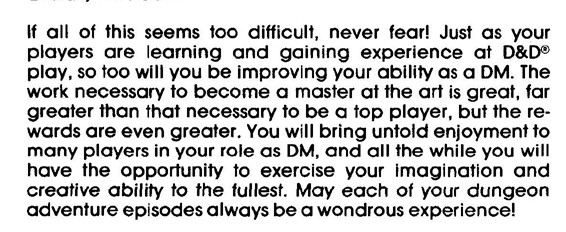
Many old D&D modules have this "wander the halls and kill" mentality. B2 is different, with a more instructional conversation style for new DMs. It was written by Gary Gygax, so it is a masterpiece of a teaching module. Also, once Wizards starts running these through AI to "create new content," all that magic will be lost. Just read some of this:

Reading that makes me want to play.

Putting it through AI to "create more Gygax" makes as much sense as putting the bible in AI and treating everything it spits out as gospel. We are in for some sad lessons Wizards will have to learn.

The coming age of AI darkness aside, converting B2 to a "GURPS on the Borderlands" type experience is pretty easy with my conversion notes. Many humanoids have less than 5 hits, which in GURPS seems strange, but this is an OSR-style world, and some monsters will be minion-like here with only a few hits. Maybe they are sickly or wounded. The world may work differently, and some are more minion-like than others and lack the hits to last long in a fight.

The notes on page 14 indicate that B2 could also be seen as a role-playing module rather than a combat one. A paragraph here allows for surrender, humiliating captivity, and ransoming the captured characters back to the keep. There is another paragraph allowing for alliances with the tribes and setting them against each other. On page 6, Gygax talks about how those who survive may "turn from Law and good to serve the masters of Chaos."

This, as a role-playing module in GURPS, raises many questions. First, picking a tribe—or even being offered a chance—to cooperate with them. None of my playthroughs of this adventure ever ended with the players setting the tribes against each other—partly because there is very little advice other than this section. A few of those in the tribes may know common languages, but speaking those languages will come in handy if you choose this route.

Being captured and overhearing conversations may help characters learn of tensions and opportunities, but my players were never captured when we played this. Many who play this in 5E treat it as a deathtrap dungeon where the monsters fight to kill with no quarter given. You could start the game by having players captured in the Caves of Chaos and ransomed, which is one way to drop these seeds.

This module should be less deadly than it is written. There is a lot of talk of defenses and traps but not enough about the tribes' leaders and their goals outside the caves. Are the orcs fighting with the lizardmen in the swamp? Would they reward characters for freeing orcs captured by the lizardmen? If you side with the goblins, what do they want? What would you say if they asked you to go against the Keep? Would they even ask that, knowing who you are? Could one tribe work out an arrangement with the party to work for them - but not against the keep - and eventually fight with that side to eliminate the others?

D&D has this "never work with the monsters" thing going on, and this was cemented after the Satanic Panic of the 1980s. D&D never had the good-to-evil alignment axis in these early modules, only law versus chaos. Working with the tribes was an option. Aligning with Chaos was also an option. D&D has always had a thing against "the evil campaign" and even "characters who did not align with the common good." They use the fear of "players fighting" as a boogeyman, and most adventures are written with the "hero narrative" in mind.

This module is likely different from many that came after because TSR feared releasing sandbox modules where one could side with Chaos. The D&D and AD&D split further pushed D&D to be the safe "for kids" game, and AD&D got the good-to-evil axis, which honestly prevented many evil games from ever happening since you chose alignment once, and it stuck that way as guardrails for player behavior. D&D was actually the more morally ambiguous game since servants of Law could commit "evil" actions (paladins killing innocents on a crusade) and servants of Chaos could do "good" (Robin Hood stealing from the rich).

Similarly, servants of Law could justify working with a tribe if the cause of Law comes out ahead. The servants of Law could also go back on their word after all; killing all the other tribes and finishing off the one you worked with would help the cause of Law in the grand scheme of things. The law-to-chaos axis is much more fluid and allows for betrayals by both sides. Good-to-evil is far more absolute and restrictive.

To rebuild this adventure to be a true "GURPS on the Borderlands" experience, you will need to rethink how you approach this adventure as a player - and the referee will need to rethink how to run this adventure. There will be far more outside missions and alliances if the party takes the route of talking with the tribes and negotiating with them. There will be jealousy and hatred from the opposing factions. Special missions that take characters to other places or deeper underground may be asked for. Some in the keep may get suspicious of the adventurers that return with gold, but no reports of the Caves of Chaos being cleared out. There could be intrigue in the town or secretive factions trying to blackmail the players (and get them to do missions for them next). Maybe there is a plot to overthrow the keep's leadership, or an outside group of crusading paladins arrives.

Also, the skills players pick to deal with the tribes won't be the same as those needed to clear out these halls. While improving combat abilities is still essential, languages, lore, social skills, survival skills, tracking, and stealth skills to spy on other tribes will also be needed. An engineer could fortify defenses and put fatal flaws in them in case of a double-cross. Trust will need to be built. The tribe may ask for services the players don't have skills for, and they will need to figure out a way to get this done (with hirelings paid well to keep quiet or learning how to do these things themselves).

And then there is the "end boss" of the adventure in the Shrine of Evil Chaos, who will undoubtedly notice all this happening and take an interest in the newcomers and their activities. Will he fight them or make an offer? Depending on the player's choices, there could be a lot of roleplaying and double-crossing here.

D&D and 5E don't put you in this mindset, as the adventure is still seen as a "wander the halls and kill things" experience. The skills in 5E lend themselves to something other than this type of classic "dungeon is a puzzle" roleplaying. Languages are typically set in stone, and you can't learn new ones. You will never learn to speak with the tribes here, so let's just kill them all instead. You can never learn orc culture, belief, and history skills, so how can you even relate to them?

Kill them all and take the treasure.

Combat is fun!

There is a lot more to this adventure as rooms to toss fireballs, flasks of oil, and sleep spells into. Especially when you look at this adventure through the lens of a different set of rules.

Saturday, March 23, 2024

Campaign Planning Form

The assumption that "every world must be accessible" hurts GURPS. The core book, Campaigns, has a chapter on an Infinite Worlds campaign that tries to tie everything together. Still, this chapter establishes a "multiverse reality" that confuses many players, as if everything has to be in everything.

In turn, I find myself putting everything in there when creating campaign worlds because why not?

And I never start them since I am discouraged and unhappy.

I was working on a GURPS Pathfinder game, and the source material felt overwhelming. What do I include? Where do I start? How do I narrow this down? Conversion becomes a thought experiment that eventually becomes a source of disappointment and a negative experience.

Incredibly confusing is "leveled content," such as an adventure module for a party of five between levels 4 and 7. Even if those numbers were correct, which in D&D varies widely, different classes are far more potent at certain levels than others. Even if you say 25 CP = 1 D&D level, what do you do when you enter the module? Are the 250-point Dungeon Fantasy starters at level 10?

A 25-point goblin could take down a 250-point character with one lucky hit. GURPS's balance is far flatter than any version of D&D, which is good. When you convert a module, use the suggested level to set the rough "point limit" and then use it as a narrative flow for encounters and challenges - don't try to convert every number and monster over to GURPS; estimate and capture the flow. Many of the ratings in D&D-style games mean very little, and the "leveled nature" of the game creates many problems.

I am much happier when I limit the options, focus, and scope of a campaign world before I even start and set those parameters up before play. We have a tool for that, the Campaign Planning Form.

This form (found here) needs more love and attention, and I rarely see it mentioned. If I converted a module from any OSR or D&D game, I would use this sheet to lay out the game's parameters. I would also forget about any "setting" the module was supposedly set in and just assume the GURPS campaign is only the module, and that is it for scope.

Are you trying to run a GURPS or Dungeon Fantasy campaign for Keep on the Borderlands? Then forget about the setting, Mystara, and focus only on the module as the campaign. Pay close attention to the campaign planning form's sections on valuable and useless character types and appropriate and inappropriate professions. If you want to play this more as a band of sneaky thieves than kick-in-the-door barbarians, the sheet can help get everyone on the same page.

You can add other notes on this sheet, like stating whether the equipment and price list are from Dungeon Fantasy or you are using it in a game like Basic Fantasy. Will the monsters be taken from GURPS sources or converted from Basic Fantasy? Are some sources more for inspiration? Are some of the adventures you will be playing? Are there some informational resources? List them all on the sheet with notes.

Will magic items be converted from an OSR source or pulled from an official book like Dungeon Fantasy: Magic Items? There can be a lot of sourcebooks and resources in a converted campaign, and using a sheet like this to list and categorize them can help keep your game from drifting off in scope and pulling in resources you never really intended to be brought into the game.

If we circle back to GURPS: Pathfinder, that setting goes the entire range of tech levels once you throw the lands of super-science ruins (Numenera) into the world. Androids walk around here. Some things I just don't want to handle in a Pathfinder world. I like the fantasy setting, and the S3 Barrier Peaks-style adventure feels better suited for a more focused science-fantasy setting, like a Gamma World. If I were doing the science-fantasy Iron Gods adventure path in Numenera, I would limit the campaign and scope to that. You may even set a base tech level for different areas, shops, and NPC factions.

The most significant hurdle to playing GURPS is narrowing it down. Use the Campaign Planning Form to collect your ideas, inspirations, and resources and distill them into a plan for your game that will help you focus the idea you are trying to express and focus it like a laser onto the story you and your group are trying to tell.