
We loved the old TSR Top Secret game back in the early 1980s. This was our first modern RPG, and it was quickly replaced by Aftermath, since that game did more of everything, and gave us far more bang-bang for the buck. But we had fun with the game, and it lasted alongside AD&D for a while. Star Frontiers and Aftermath took away all the time for this, and we quietly dropped the game for greener pastures.
There is an updated game, Top Secret: New World Order, but it has little to do with the original game mechanics. It looked fun, but I did not get into it after buying in. I would love to see a Kickstarter to reprint the OG Top Secret books and adventures in hardcover. I would support that.
Top Secret is an interesting game that was released in the late 1970s; it is very dated but cool in a retro way. It is a mix of Bond, the Mission: Impossible TV show, Dirty Harry, Charles Bronson, Three Days of the Condor, and other 60s and 70s British spy thrillers, mixed with American action movies.
The game seemed to have two personalities, one wanted to be the suave agent picking locks and wearing a tuxedo to a posh casino, and the other wanted to be a submachinegun-toting commando in a wetsuit on a daring commando raid. Many players used this as a modern combat game back in the day, forgetting the agent's style and class, dressed in a tuxedo and sipping a martini.

The 007 Game we had was fun, but we never really got into it. This game killed Top Secret for everyone else, since fans went for the real thing, and the TSR game was lost to the winds. I loved this game, though it had a few licensing issues, not being able to mention a few characters and organizations from earlier movies due to the IP's licensing mess at the time.
Yes, even licensed games can run into licensing issues.
This game flipped the script on the spy genre, and the classy agent was back, and machinegun combat was deadly and to be avoided. The game had far more tools to be cool, a robust skill system, and many things to do outside of combat. The Louisiana sheriff from the Roger Moore movies appears in the encounter tables, even as an overseas tourist, which is a hilarious footnote to this game.
It does sound familiar, since in GURPS, combat is deadly, as it should be.

There is also a retro-clone of the Victory Games spy game, minus the IP, with the rules cloned to the best of their ability. This is a cool game that captures the fun of the original and is recommended if you loved the 80s version and want to play an updated version today with a new rulebook. This captures the suave agent feeling of the 00-game; combat is deadly, and you get to do all the cool "spy things" with an updated and modern set of rules. Highly recommended if you loved the original game, plus you can get this in print from DriveThru.

Ninjas & Superspies was more my type of game, having grown up with UHF channels showing dubbed martial arts movies on Saturday morning, Chuck Norris and Bruce Lee films, and that 1970s Kung Fu vibe being the gold standard of being a super cool "bad dude." This also had all the toys, vehicles, modifications, and other genre gear, along with more martial art types than you could shake a fighting stick at.
Like the 00-game, Ninjas & Superspies has a robust skill system that gives you much more to do than "just shoot things." Many skill picks are given to you, ensuring competency in a bunch of areas of knowledge, like putting a GURPS character together with a series of templates. In the Palladium game, if you choose Guerrilla Warfare training, you get a bunch of skills and abilities you would pick up in that specialized training. In GURPS, you would pick a template with those skills. So the games are similar in how they create templates, but Palladium still relies on a class-based system.
I still play Ninjas & Superspies. The martial arts and moves in this game are fun. The game is dated to the 1980s, but that is not really a problem since that is when all the best movies, TV shows, martial arts movies, and action cartoons came out.

We have two excellent 3rd Edition sourcebooks that cover super spies and espionage! GURPS Espionage is the older book, and it offers some of the best campaign advice for running spy-based games. This book beats all the other games on this list for getting you deep into the mindset, lingo, and terminology of these services and agencies. The GURPS sourcebooks are superior to many of the spy games here, since they cover the subject rather than tripping over themselves writing rules.
I really love GURPS Espionage, and it is up there with Top Secret as one of my favorite spy supplements and games. The section on spy lingo at the end is worth the price of admission. Top Secret had a section like this, but this is much better and more complete.
There is also an Operation Endgame espionage adventure by the same author, available here.
GURPS holds up better than most of these games, and it is far better supported. If I were playing with an organized group in weekly play, I would go with GURPS. The rules and support are superior to most of these games, and you have the best character designs in gaming.

Spycraft, the D&D 3.5E spy game, I have but never got into. I love the comic-style art in this game, but, like anything in the D&D 3.5E era, it is rule-after-rule and too much game. There was a time in gaming when 3.5E was king, when everyone overdid it with rules, and it is still like that with 5E. Spycraft is still a heck of a game, and if you are into it, I envy you.
I only have time for one game this in-depth, and I choose GURPS.
I don't have the time for anything 3.5E these days without character creation software, and for me, GURPS does all of this more easily and with greater flexibility for my characters. Even GURPS feels rules-light compared to some of the games I have on my shelves, with only two core books, and most of the rules can be optional if you use GURPS Lite as your core system.

The other GURPS book is GURPS: Covert Ops, a more modern take on the genre, a world of special operators, and a more military-themed and Bourne Identity and Mission Impossible take on the genre. Where the earlier book was more the classic spy movies of the 1960s-1980s, Covert Ops feels more like the movies of the 1990s to today. This is another excellent book if you want to update your game to more modern tools and techniques.
GURPS and Palladium are simple core systems built around a straightforward success roll. Spycraft is super text-heavy, with page after page of character powers, feats, classes, and other choices to make. There are times when my eyes glaze over, and I can't even read a 3.5E game since there is too much text, too much to read through, and far too much to piece together. Of the games on this list, Spycraft is the most complicated, including GURPS in the comparison.

To do a good spy game, you need some reference materials and inspiration. There are plenty of books in the genre, and the obvious ones are obvious. Get yourself a movie encyclopedia and a guide on your favorite films, and you will begin to build a framework library to pull from. GURPS can do any of these sorts of "movie games" flawlessly and with outstanding historical accuracy.

Especially with the sourcebooks previously mentioned. GURPS: Action should not be overlooked either, for a more modern action-movie treatment, and this has the bonus of being written for the 4th Edition, full of templates and great genre advice for action movies, which many spy movies also fall into.
You would not go wrong by starting in GURPS Action, and then pulling in some of the technical talk and genre advice from the espionage books. This is the best route to go, since you get full 4th Edition templates, action-movie-like genre rules, plenty of suggestions on handling "spy stuff," and lots of other genre support. This is the best way to go in GURPS when doing a super spy game.
I would love to see all of GURPS Action in a nice hardcover.

The film guides are essential, since you may prefer a narrow range of films over others and want to set your game during a historical period, such as the 1960s, 1970s, or 1980s. Having the look and feel of those films will give your game and presentation much more authenticity, and they will also be helpful if you want to create characters and organizations inspired by some of the greats.
You can play in the era of a particular movie, or even replay the events of the film yourself and see how it comes out. My brother and I used to do this: go scene-by-scene through a movie, set a starting point and an end point for something the PC had to do, such as "escape the motorcycles chasing you," and then play through that scene using GURPS. We would then laugh as it came out completely wrong and move on to the next scene, the best we could do (if the characters were still alive).

Sometimes a dramatic change would happen, such as Oddjob being killed in an early scene, and we would have to replace him with a new NPC for the rest of the movie, like Chopjob, Oddjob's much thinner brother, who was into martial arts. Blame the PCs for losing the golf game; one of them tries to run Oddjob over with the golf cart, and they accidentally kill him.

Sometimes the PCs would die, and the "second team" would be sent in to replace them. "Major Kill" came in as a Connery-inspired cigar-smoking commando with twin Uzis and plenty of hand grenades, and he proceeded to shoot his way through every problem in Live and Let Die.
Those alligators never stood a chance.
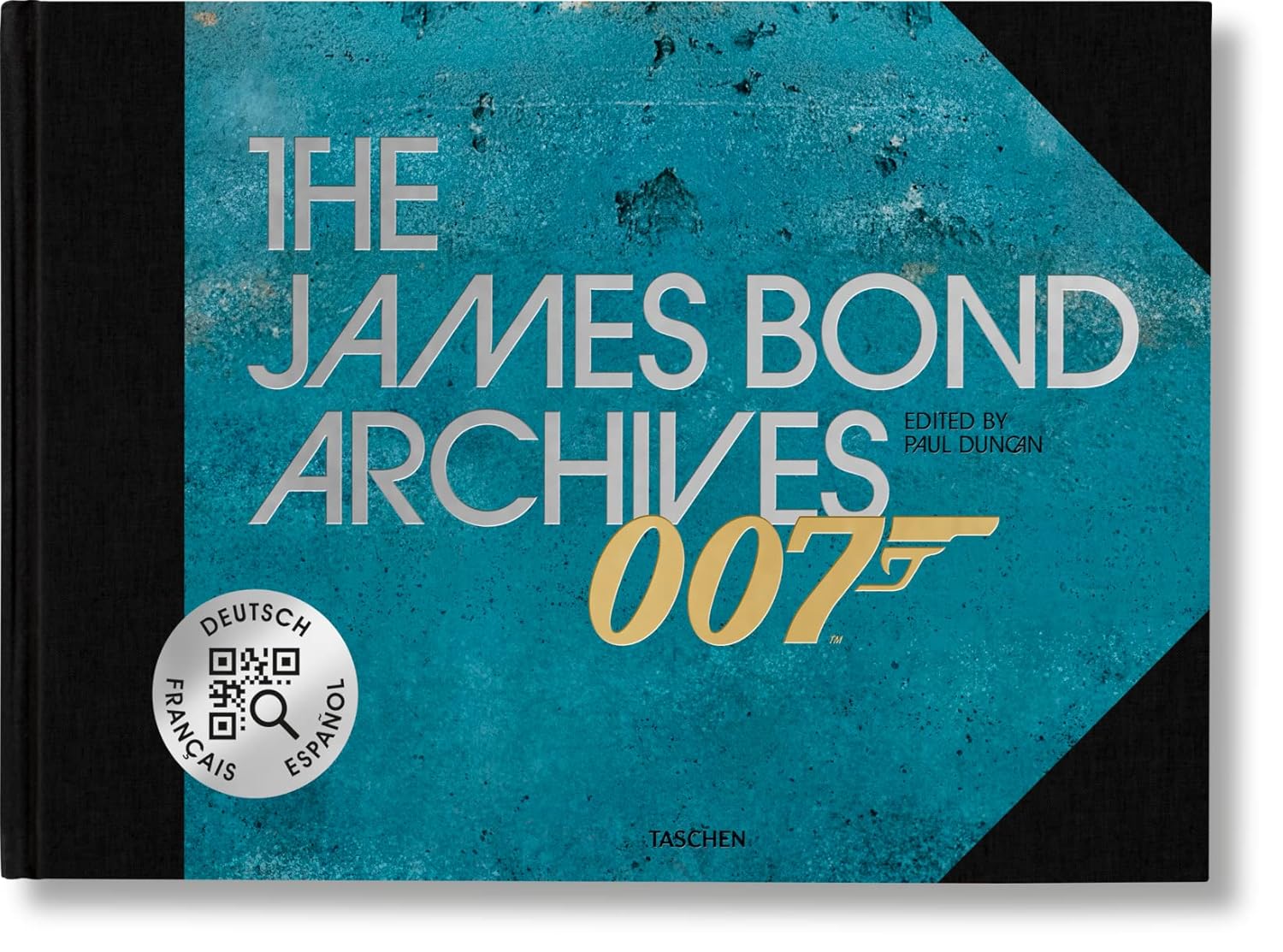
I am also a film buff and historian, so I love all this trivia and period-piece information. There is a special magic to being able to pull this off, and not just default your games to "the current year." Given how countries and borders change, you may need an almanac or book on the era you are interested in, just to keep you grounded. There was once a place called Yugoslavia, which was part of the Warsaw Pact. China was not always a superpower, and it had terrible famines and internal struggles. The Soviet Union was often the big bad guy.
I could pull off a 1960s superspy game without it being campy or trite, and it takes a special sort of suave, debonaire attitude as a referee to make it happen. You need to get into the chic, swanky, bow-tie, Monte Carlo-exotic destination vibe of the postwar world. The world of the rich movers and shakers, the giants of industry, the generals and politicians, the spymasters, the hard-nosed reporters, the field agents, and the playthings of the rich. You are a VIP, someone nobody knows, but you turn heads with your calm attitude and perfect style.

GURPS would do this game very well, and it does not have to be 100% shooting and combat. A referee needs to be able to build tension, suspense, and run those ticking clocks the players are constantly working against. You need to provide clues, opportunities to sneak into hotel rooms and look around, chances to tap phones, search for eavesdropping devices, arrange clandestine meetings with contacts, and watch your targets in plain sight while pretending to be a tourist or high-stakes gambler.

Part of the problem with this game is managing a skill list that may grow as long as your arm. Secret agents are the worst skill monkeys in gaming, and the things they need to know to hold a cover or do well in casual conversation are daunting, to say the least.
Pick a cover occupation, a hobby, a sport, and an esoteric area of interest for your agent and focus on those areas. Do well in those, and don't try to do everything. Also, pick a combat style and a favorite weapon. Finally, select an area inside the agency to specialize in, such as investigations, security systems, breaking and entering, assassinations, technical specialties, vehicles, underwater operations, charm school, or other "agency expertise," and focus on that as your specialty.
The movie superspies tend to be Mary Sues who are instantly good at anything and everything, depending on what the writer needs. I never knew he was an expert lawn darts player! Who would have known he knew that much about the Ming Dynasty? I never knew he was a master go-kart driver. Beware of the films that make a lot of stuff up on the fly, and consider realistic experiences and character types.

With GURPS, you need to focus and narrow your specialties. This is more like Mission Impossible than it is 007, especially with lower point totals, so keep that in mind. There is nothing wrong with being a specialist in underwater demolition who enjoys waterskiing, competitive swimming, yachting, naval history, sailing, SCUBA diving, and survival. You will go on a lot of boat missions, but the bad guys tend to love yachts, so you will fit right in and be a tremendous asset.
Just make sure the rest of the players sort of know what areas you will focus on, since the "desert survival agent," and you will probably be fighting about what mission you want to be sent on. Building a team of agents to work across related areas will enhance your team's ability to collaborate and complete missions.
Just like in real life, specialists will be able to handle more dangerous missions, while generalists will be unsuited for anything other than basic applications of the skill. Sometimes, a general SCUBA skill will get the job done if all you need to do is swim onto the island undetected.
One player plays the SCUBA agent, another plays the face who goes to the party, another plays the party member who picks locks and breaks into safes, another plays the disguise expert, and another plays the team leader and mastermind. If the team complements each other, the players will have more fun, and you will be able to switch between them when they break up, and keep that tension high. Suppose the VIP is trying to get back to his office, one player is distracting him, another is trying to pick the wall safe, and one keeps the security system disabled. In that case, it is a super high-tension moment and worthy of the type of game we are trying to run.

Vehicle drivers and gunners? Make them NPCs, and focus players on the people who will be "boots on the ground" in these mission areas. Otherwise, everyone else will be having fun at the party or sneaking in, while the chopper pilot sits there on his phone and waits for everyone. The player playing the door gunner will get bored and ask to strafe the yacht with machine guns and rockets.

This is a game type that requires a lot of coordination and planning on both the player and referee sides. You all have to be fans of the era you will be playing in, or else just default to the modern day. Your team needs to be designed to work together. Each character needs to be a well-thought-out person, able to work a cover job, while managing their agency specialty, and balancing combat skills for when things go wrong.
Also, you are more "designing a team" in party-based play than you are designing a single agent. There is a big difference between a single-agent game and a team-of-experts game. If you are playing solo, you will need to handle many contingencies while still excelling in a few key areas. If you are playing with a team, have a session zero where the group discusses who will cover what, and don't be afraid to steer them toward a direction you know will come up, or to point out if they leave a critical area uncovered.
"Okay, so the commandos parachute in, and you are dropped off at the trail at the base of the mountain since none of you know how to parachute. You arrive five hours later, too tired to walk, and Major Kill smiles as the villain's base lies in ruins around him as his commandoes clean up the mess. All right, agents, I found a few interesting things..."
This is one of the most complex types of games to pull off, since you need to be a super fan, know the system, and be able to design characters to fit those roles and work together. The referee needs to adjust the missions and challenges so players can succeed without throwing the whole team into the Arctic, where they have zero survival skills and will all freeze to death.

But if you pull this off, and you can balance the tension the genre requires with the sneaky-sneaky spy action, peppered in with tense combats with real stakes, you will have proven yourself to be a worthy mastermind of the superspy genre and adventuring.
GURPS really does have the best support for spy games in this entire list and history, primarily because you can focus a game on the Basic Rules and the spy books, start in Action to make it more like an action movie, and add the spy stuff from there. A good 25% to 50% of the entire GURPS library can also be used as support material, which is a considerable amount of information and support. Want bio-tech, cyborgs, martial arts, modern guns, military hardware, and the list goes on and on? You have it all.
You have your mission, agents, and there is no time to waste.
This blog will self-destruct in...

No comments:
Post a Comment